

A customer update system for watch repairs is a specialised digital tool that automates status tracking and client communication throughout the entire repair lifecycle. Without one, shop owners face a familiar problem: phones ringing constantly with “is it ready yet?” calls, staff pulled away from the bench, and clients left feeling ignored. The industry standard in 2026 covers photographic intake, chain of custody logging, automated SMS and email notifications, and digital estimate approval. Shops that implement a structured repair job communication system protect their reputation, reduce administrative workload, and give clients the transparency they expect from a professional service.
What are the essential features of a customer update system for watch repairs?
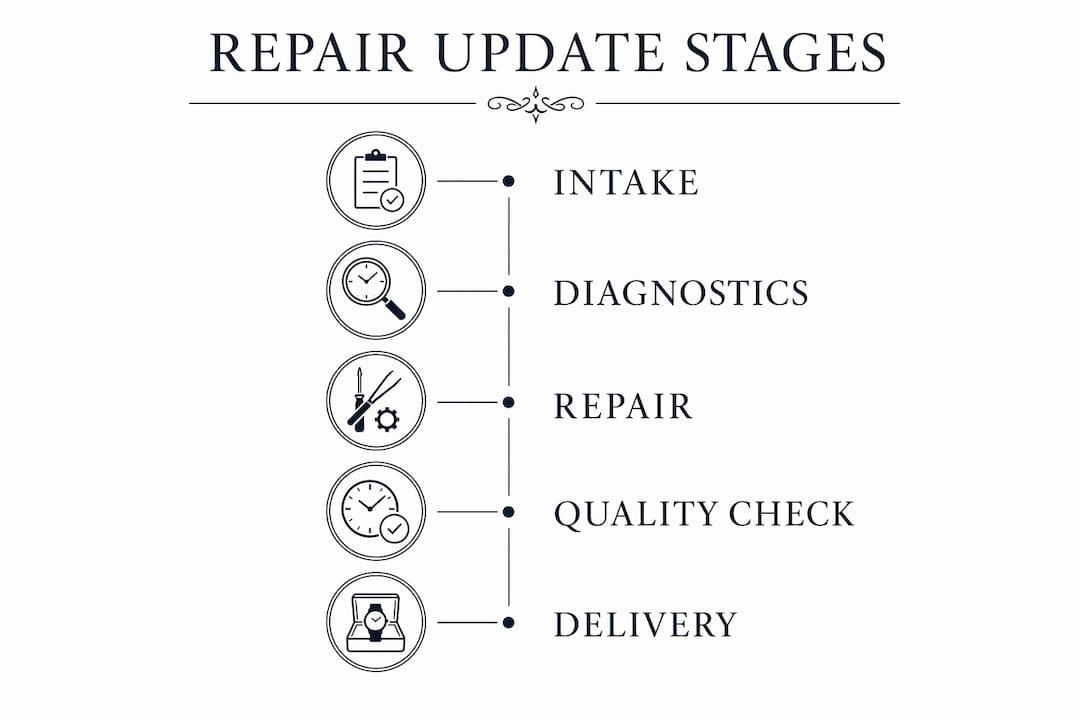
A well-built watch repair tracking system covers every stage of the repair lifecycle, from the moment a timepiece arrives at the counter to the moment it leaves with the client. Comprehensive tracking systems log six core workflow stages: intake, estimate approval, in-progress repair, quality control, ready for collection, and full history logging. Each stage creates a timestamped record that protects both the shop and the client.
The essential features every shop should look for include:
- Photographic intake documentation. High-resolution images captured at intake serve as evidence of the watch’s condition before work begins. This protects against damage disputes, which are particularly costly with luxury timepieces.
- Technician assignment and chain of custody logging. Chain of custody timestamps every handoff during the repair process, creating a clear accountability trail for high-value watches.
- Automated SMS and email notifications. Status updates triggered by workflow changes, such as parts arriving or a repair completing, keep clients informed without staff lifting a phone.
- Digital estimate approval. Online estimate approval via SMS or email speeds client response time and removes the friction of waiting for telephone approvals.
- Warranty and service history management. A permanent digital record per client and per timepiece supports repeat business and aids clienteling over time.
- Pickup signature capture. Logging the collection with a digital signature closes the chain of custody and provides a clean audit trail.
Pro Tip: Look for software that stores serial numbers and warranty conditions per item. Generic CRM tools rarely include these fields, and missing them creates gaps that cause problems during disputes or warranty claims.
Specialised software for watch and jewellery repair handles serial number tracking and warranty management in ways that generic CRM or ticketing tools simply cannot. Selecting the right system from the start saves significant rework later.
How to integrate a customer update system into your watch repair workflow
Adopting a repair status notification system works best when you treat it as a workflow redesign, not just a software installation. The process has clear stages, and skipping any one of them creates gaps that undermine the whole system.
- Assess your current volume and hardware. A shop handling fewer than 10 jobs per day can manage with a basic system. Shops exceeding 10–15 repair jobs daily should adopt an automated system before that threshold, not after, to prevent information flow breakdowns.
- Select software built for watch and jewellery repair. Modern repair software suites integrate point of sale, CRM, inventory, and repair tracking in one place. Siloed tools cause lost items and missed deadlines.
- Set up photographic intake at the counter. Every watch that comes in gets photographed from multiple angles before it moves anywhere. This step takes under two minutes and prevents disputes that can take hours to resolve.
- Configure automated notification triggers. Map your workflow stages and assign a notification to each one. A client should receive a message when their estimate is ready, when repair begins, when parts arrive, and when the watch is ready for collection.
- Enable digital estimate approval. Send the estimate via SMS or email with a link for the client to approve or query. This removes telephone tag from the process entirely.
- Train staff on the new intake process. Change management is the most common failure point. Run a two-hour session covering intake photography, ticket creation, and how to handle client queries about the system.
- Capture pickup signatures digitally. Close every job with a digital signature at collection. This completes the chain of custody and gives the client a final confirmation.
| Stage | Action | Client notification |
|---|---|---|
| Intake | Photograph, log serial number, create ticket | Confirmation of receipt |
| Estimate | Generate quote, send for approval | SMS or email with approval link |
| In progress | Technician assigned, work begins | Update on watch repairs sent |
| Quality check | Senior technician reviews completed work | Internal only |
| Ready for collection | Job marked complete | Watch repair status notification sent |
| Pickup | Signature captured, record closed | Collection confirmation |
Pro Tip: Run a parallel paper log for the first two weeks after going live. It gives staff a safety net while they build confidence with the new system, and it highlights any gaps in your digital setup before they become real problems.
What are common challenges in watch repair customer update systems?
Manual systems fail predictably once volume grows. The most common breaking point is the absence of a single source of truth: jobs tracked on paper, in a spreadsheet, and in someone’s memory simultaneously. When those three sources disagree, clients get wrong information and staff waste time reconciling records.
The most frequent challenges shop owners encounter include:
- Scaling beyond manual capacity. Shops with over 50 jobs per day need automated real-time tracking to handle workload without administrative backlog. Manual systems collapse well before that volume.
- Communication gaps that drive inbound calls. Clients who call repeatedly for status updates are not being difficult. Frequent status enquiry calls signal a communication system failure, not a difficult client base. Automated updates eliminate the root cause.
- Incomplete condition documentation. Skipping intake photography creates liability. A single undocumented scratch on a Breguet or Baume & Mercier can generate a dispute that costs far more than the repair fee.
- Software customisation pitfalls. Shops sometimes choose generic platforms and then spend months trying to adapt them. Generic CRM or ticketing tools lack serial number tracking, warranty condition handling, and photographic intake features that watch repair demands.
- Inconsistent messaging and branding. Notifications sent from different staff members in different tones undermine the shop’s professional image. Automated, templated messages solve this without extra effort.
“Customers frequently calling for status updates signals a communication system failure rather than difficult behaviour. Automated updates address the root cause directly, reducing staff interruptions and rebuilding client trust through consistent, timely information.”
Maintaining professional branding across every client touchpoint is not a cosmetic concern. Automated personalised notifications sent in a consistent tone reinforce the shop’s reputation with every message sent.
How automated updates improve client satisfaction and reduce workload
Automated watch maintenance updates produce two measurable outcomes: fewer inbound calls and stronger client trust. Both matter to a shop’s bottom line, but the second is harder to recover once lost.
Repair lead times for luxury watches can span 12 to 14 weeks post-invoice. That is a long time for a client to wait without news. Regular, automated status updates during that window transform a potentially frustrating experience into one that feels managed and professional. Clients who feel informed are far less likely to escalate concerns or leave negative reviews.
The workload reduction for front desk staff is equally significant. Every automated notification is one fewer phone call answered, one fewer manual update written, and one fewer interruption to the technician’s bench time. Automated SMS and email updates reduce incoming status enquiry calls significantly, freeing staff to focus on higher-value tasks.
Repair history logged per client and per item also supports long-term business growth. Permanent digital repair records give staff instant access to a client’s full service history, making every interaction more informed and every upsell more relevant. A client who feels known and remembered returns more often.
The reputational benefit compounds over time. Shops that send branded, professional notifications consistently project an image of reliability. That image attracts the kind of client who owns watches worth servicing properly, and who refers others when the experience meets their expectations.
Key takeaways
A structured customer update system for watch repairs is the single most effective tool for reducing client enquiry calls and protecting shop reputation during long repair cycles.
| Point | Details |
|---|---|
| Adopt before volume peaks | Implement an automated system before exceeding 10–15 daily jobs to prevent workflow breakdowns. |
| Use specialised software | Generic CRM tools lack serial number tracking and photographic intake; choose software built for watch repair. |
| Automate every notification trigger | Map each workflow stage to an automated SMS or email so clients receive updates without staff intervention. |
| Document intake with photographs | High-resolution intake images protect against damage disputes and are non-negotiable for high-value timepieces. |
| Log repair history per client | Permanent digital records support repeat business and give staff the context needed for informed client interactions. |
Why I think most shops underestimate the communication problem
Most shop owners I speak with frame the customer update challenge as a technology problem. They think the answer is finding the right software. The real problem is almost always a process problem that technology then solves.
I have seen shops with perfectly capable software still fielding a dozen “is it ready?” calls a day, because nobody mapped the workflow stages to notification triggers properly. The software was installed, but the communication design was never done. That distinction matters enormously when you are evaluating what went wrong.
The shops that get this right share one habit: they treat every client notification as a brand touchpoint, not an administrative task. A well-written SMS sent at the right moment does more for client retention than a discount ever will. Clients remember how a shop made them feel during a long wait, and a watch sent away for a full overhaul can sit in a workshop for weeks.
My honest advice is to start with your intake process before you touch anything else. If you cannot document the condition of a watch the moment it arrives, no amount of automated messaging downstream will protect you when something goes wrong. Get the intake right, then build the notifications around it.
The technology trend worth watching is web-based client portals, where clients log in to see real-time repair progress rather than waiting for a push notification. That level of transparency is already standard in other service industries. Watch repair shops that adopt it early will have a clear advantage in attracting clients who own watches worth the investment.
— efe
How Watchrepairstation supports your repair communication workflow
Watchrepairstation has operated as a trade-to-trade watch repair specialist since 2008, working exclusively with watch and jewellery shops across the UK. The service is built around quick turnaround times and a “No Fix, No Cost” guarantee, which means partnering shops carry zero financial risk on every job they send.
For shops building out their watch repair service infrastructure, Watchrepairstation handles the technical repair work so your team can focus on client communication and front-of-house operations. Every repair is handled by expert technicians covering battery installation, movement repairs, and full overhauls. Partnering shops benefit from competitive trade pricing and the kind of reliability that makes client communication straightforward. Explore the full range of repair services to see how Watchrepairstation fits into your workflow.
FAQ
What is a customer update system for watch repairs?
A customer update system for watch repairs is a digital tool that tracks each stage of the repair lifecycle and sends automated notifications to clients at key milestones. It typically covers intake, estimate approval, in-progress updates, and collection confirmation.
When should a watch repair shop adopt an automated tracking system?
A shop should adopt an automated system before it regularly handles more than 10–15 repair jobs per day. Waiting until volume exceeds that threshold risks information flow breakdowns and manual errors that are difficult to recover from.
What is chain of custody logging in watch repair?
Chain of custody logging records every handoff of a timepiece during the repair process, with timestamps and technician details at each stage. It creates an accountability trail that protects both the shop and the client, particularly for high-value watches.
Why do clients keep calling for repair status updates?
Frequent status enquiry calls indicate a gap in the shop’s communication system, not difficult client behaviour. Automated SMS and email notifications triggered at each workflow stage eliminate the root cause by keeping clients informed without requiring staff to respond individually.
Can generic CRM software manage watch repair tracking?
Generic CRM tools are not suited to watch repair because they lack serial number tracking, warranty condition handling, and photographic intake features. Specialised software built for watch and jewellery businesses handles these requirements as standard.

Leave a Reply