

Watch repair triaging is defined as the structured process by which a technician assesses, classifies, and prioritises a watch based on its condition and repair needs before any servicing begins. The term borrows from medical triage, and the parallel is exact: just as a clinician sorts patients by urgency, a watch technician sorts timepieces by service tier. Triaging classifies watches into three distinct categories, with routine maintenance typically taking 1–3 weeks, full overhaul 4–12 weeks, and extensive restoration 3–6 months. Getting this classification right at intake determines every downstream decision: cost, parts sourcing, customer communication, and workshop throughput.
What is watch repair triaging and how does it work?
Watch repair triaging is the first and most consequential step in the repair process. It transforms an unknown quantity into a defined scope of work before a single tool touches the movement. Without it, technicians risk misdiagnosis, wasted bench time, and customer disputes.
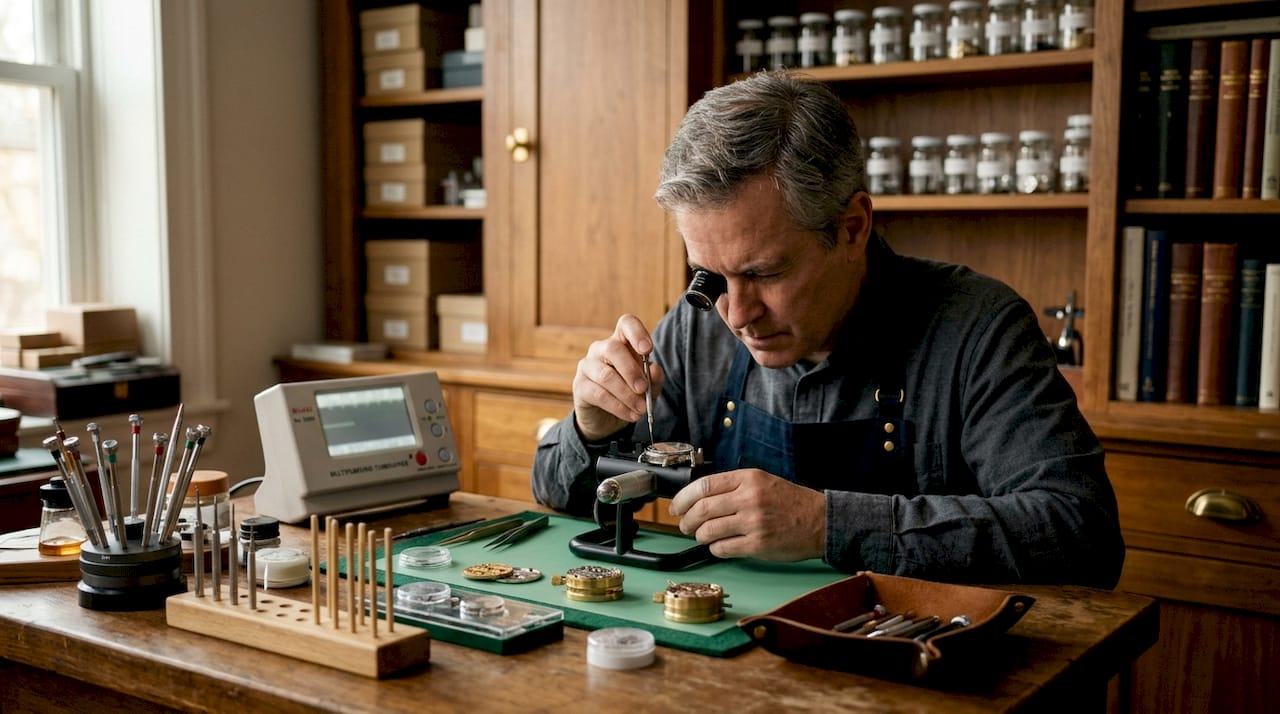
The triage process follows a consistent sequence of diagnostic steps. Initial assessments using a timegrapher and visual inspection consume 15–30 minutes per piece. That window is enough to identify the most urgent conditions and assign a service tier with confidence.
The standard triaging sequence runs as follows:
- Visual inspection. Examine the case, crystal, crown, and bracelet for physical damage, corrosion, or signs of prior amateur repair.
- Timing test. Place the movement on a timegrapher to record rate accuracy, amplitude, and beat error across multiple positions.
- Water resistance check. Use a pressure tester to confirm gasket integrity, particularly after any impact or crown damage.
- Urgency identification. Flag emergency conditions: water ingress, mechanical seizure, shock damage, or severe magnetisation.
- Documentation. Record all findings in writing, photograph the watch, and assign a service tier before the customer leaves.
- Category assignment. Classify the piece as emergency, maintenance due, or aesthetic and non-critical.
Effective triaging prevents misdiagnosis by ruling out superficial fixes and identifying underlying mechanical or magnetisation problems early. A watch presenting with poor timekeeping may need demagnetisation, not a full overhaul. Triaging catches that distinction in the first 15 minutes rather than after three hours of disassembly.
Pro Tip: Always test timing in at least three positions, dial up, dial down, and crown left, before assigning a service tier. A movement that runs well dial up but loses 30 seconds crown left signals a specific wear pattern that changes the scope of work entirely.
How does triaging differentiate routine maintenance, overhaul, and restoration?
The three service tiers identified during triage carry fundamentally different implications for cost, time, and scope. Clients often misunderstand watch repair as a binary fixed or broken state. Triaging communicates the nuanced reality driven by chemistry, wear, and age.
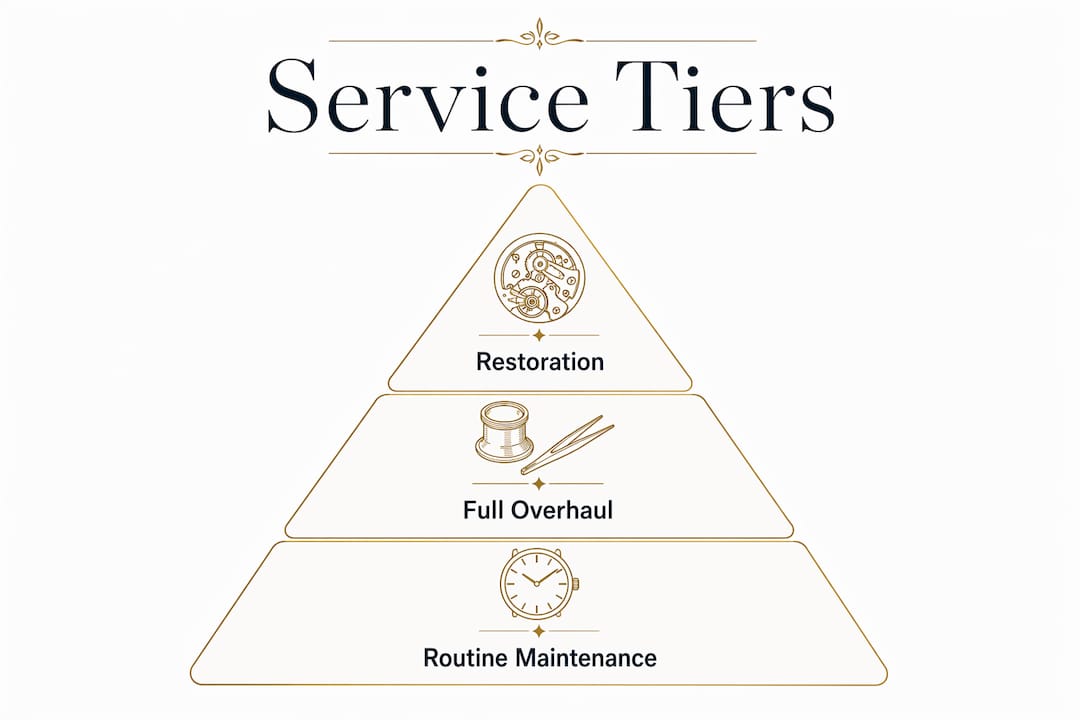
Routine maintenance covers standard servicing: cleaning, lubrication, gasket replacement, and timing adjustment. Mechanical watches require servicing every 5–7 years; quartz movements need battery and gasket replacement every 2–3 years. Lubricants degrade within this window regardless of how little the watch is worn. Ignoring these intervals turns a simple oil change into an expensive parts-replacement project.
Full overhaul goes further. The movement is fully disassembled, ultrasonically cleaned, inspected for worn or damaged components, reassembled with new parts where needed, and timed to specification. This tier applies when triaging reveals worn jewels, damaged keyless works, or a mainspring approaching failure.
Restoration addresses both mechanical and aesthetic damage. It involves part replacement, case refinishing, dial restoration, and reconditioning of the bracelet. Restoration generally costs 2–5 times more than routine maintenance and requires specialist skills beyond standard servicing.
| Service tier | Typical timeline | Relative cost | Common interventions |
|---|---|---|---|
| Routine maintenance | 1–3 weeks | Baseline | Clean, lubricate, gaskets, timing |
| Full overhaul | 4–12 weeks | 1.5–2x baseline | Disassembly, part replacement, timing |
| Restoration | 3–6 months | 2–5x baseline | Mechanical rebuild, case and dial work |
Accurate triaging at intake sets the correct tier from the outset. That prevents the most damaging scenario in customer relations: quoting for routine maintenance and then discovering the movement needs a full overhaul after disassembly.
Pro Tip: When a watch sits at the boundary between routine maintenance and full overhaul, always quote for the higher tier with a conditional note. It is far easier to reduce a bill than to explain why it has doubled.
For technicians handling mechanical watch complications, accurate tier assignment at triage is especially critical because complication modules add significant labour time to any overhaul.
What risks does effective triaging mitigate?
Triaging is primarily risk management, classifying watches into categories to allocate workshop resources and protect the customer’s investment. Skipping or rushing triage creates a chain of avoidable problems that damage both the repair outcome and the workshop’s reputation.
The most serious risk is misdiagnosis. A technician who opens a movement without a prior timing test cannot prove whether a fault was pre-existing or introduced during servicing. That ambiguity creates liability. No watch should enter servicing without documented baseline tests covering timing, pressure resistance, and cosmetic condition.
A thorough triage also produces the written estimate. A professional triage includes a detailed written estimate covering parts, labour, timeline, and quality checks. That document prevents disputes when restoration costs arrive at 2–5 times the initial expectation.
Common pitfalls avoided through rigorous triaging:
- Hidden corrosion. Water ingress identified at triage prevents a technician from opening a movement and finding rust that was not disclosed, then facing a dispute over who caused it.
- Magnetisation misread as wear. A timegrapher test at intake catches severe magnetisation before unnecessary disassembly.
- Missed shock damage. Visual inspection of the balance staff and shock jewels at triage flags impact damage that would otherwise surface mid-service.
- Gasket failure overlooked. A pressure test at intake identifies failed gaskets before a customer submits a watch for a simple battery change and later claims water damage.
- Scope creep without authorisation. Documented triage findings give the technician a clear mandate. Any work beyond that scope requires fresh customer approval.
Pro Tip: Photograph every watch at intake, including the caseback, crown, and any existing scratches. A timestamped image record is the clearest defence against any claim that damage occurred during servicing.
How does triaging improve workshop workflow and customer service?
Triage data drives every operational decision in a professional workshop. Once a watch is classified, the technician knows which bench it goes to, which parts to order, and when to contact the customer. That clarity removes the guesswork that causes delays.
Customer update systems linked to triage findings enhance transparency and satisfaction. When a customer knows their watch is classified as a full overhaul requiring 6–8 weeks, they do not chase the workshop at week two. The triage classification sets the expectation at the point of intake.
Workflow benefits of structured triaging include:
- Workload classification. Sorting watches by tier at intake lets the workshop manager assign bench time accurately and avoid bottlenecks.
- Parts sourcing lead time. Knowing a watch needs a specific mainspring or crown before disassembly begins means parts arrive before the movement is on the bench.
- Emergency prioritisation. A watch with active water ingress goes to the top of the queue. Without triage, it sits in a pile and suffers further corrosion.
- Resource allocation. Senior technicians handle restorations identified at triage; junior technicians handle routine maintenance. That matching reduces errors and improves throughput.
- Accurate turnaround commitments. A workshop that triages every intake can quote realistic completion dates and meet them consistently.
The operational impact compounds over time. A workshop that triages every piece builds a database of common fault patterns, typical parts requirements, and average bench times per tier. That data informs staffing decisions, parts stock levels, and pricing structures. Triaging is not just a diagnostic step. It is the foundation of a well-run repair operation.
Key takeaways
Watch repair triaging is the single most important process a professional workshop can standardise, because it determines the accuracy of every decision that follows, from cost to timeline to customer communication.
| Point | Details |
|---|---|
| Triage defines service tier | Classifying watches as routine, overhaul, or restoration at intake sets the scope before any work begins. |
| Baseline tests prevent liability | Documenting timing, water resistance, and cosmetic condition protects the technician against pre-existing damage claims. |
| Written estimates follow triage | A detailed quote covering parts, labour, and timeline prevents disputes when costs exceed initial expectations. |
| Workflow depends on classification | Sorting by tier at intake enables accurate parts sourcing, bench assignment, and turnaround commitments. |
| Maintenance intervals matter | Mechanical watches need servicing every 5–7 years; missing these intervals converts routine maintenance into costly overhauls. |
Why triaging is the skill most workshops undervalue
Having worked closely with professional watch repair environments for years, the pattern I see most consistently is this: workshops that struggle with customer disputes and missed deadlines almost always have weak intake processes. They are not short of technical skill. They are short of structured triage.
The uncomfortable truth is that triaging feels administrative, and skilled technicians often resist it. They want to open the movement and start diagnosing with their hands. That instinct is understandable, but it is also where most avoidable problems begin. A technician who skips the timegrapher at intake and goes straight to disassembly cannot prove what the movement was doing before they touched it. That gap in documentation is where customer disputes live.
The other thing I have observed is how much triaging improves customer communication, not just internally but in the conversation at the counter. When a technician can explain to a customer exactly why their watch needs a full overhaul rather than a battery change, citing the timing result and the gasket failure identified at intake, the customer trusts the diagnosis. That trust is worth more than any marketing effort.
My recommendation for any workshop looking to tighten its processes: treat triage as a non-negotiable protocol, not an optional first step. Build a standard intake form, photograph every piece, and never let a watch enter the service queue without a written classification. The time invested at intake saves multiples of that time later.
— efe
Watchrepairstation’s approach to expert watch repair triage
Watchrepairstation has built its trade-to-trade repair service around exactly the kind of structured triage process described in this article. Every watch that arrives at their workshop undergoes a documented intake assessment before any servicing begins, covering timing, water resistance, and cosmetic condition.
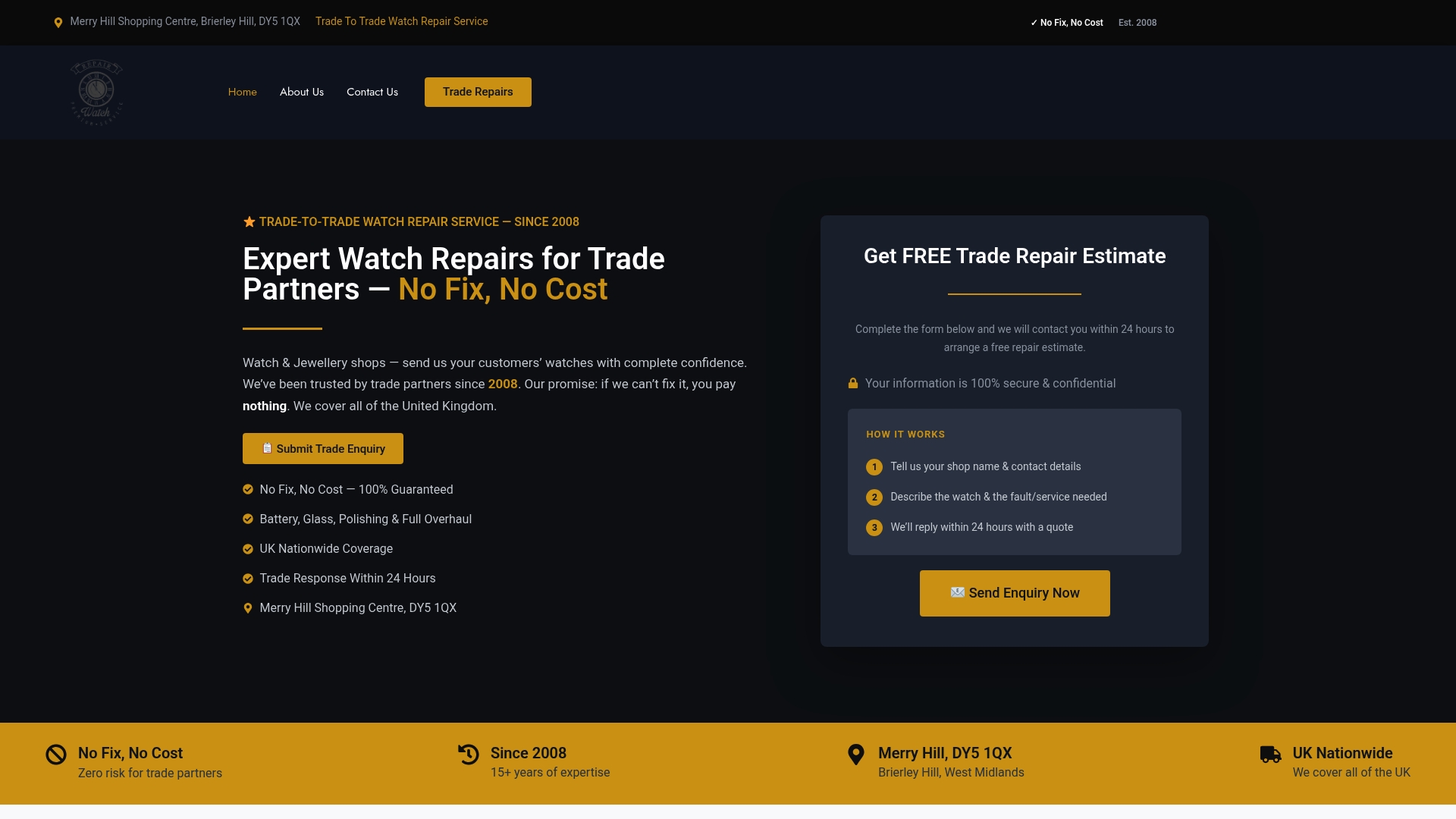
Their “No Fix, No Cost” guarantee, in place since 2008, is only possible because their triage process identifies scope accurately at the outset. Partnering jewellers and watch shops across the UK benefit from realistic turnaround commitments and transparent pricing, with no financial risk if a repair cannot be completed. For professionals who need a reliable trade partner with a proven watch repair process, Watchrepairstation offers the expertise and accountability that a structured triage operation demands.
FAQ
What is watch repair triaging in simple terms?
Watch repair triaging is the initial assessment process where a technician classifies a watch by condition and repair need before servicing begins. It assigns the piece to a service tier: routine maintenance, full overhaul, or restoration.
How long does a triage assessment take?
Initial assessments using a timegrapher and visual inspection typically take 15–30 minutes per watch. That window covers timing tests, water resistance checks, and documentation of cosmetic condition.
Why does triaging matter for customer communication?
Triage findings produce the written estimate that sets cost and timeline expectations before work begins. Clear upfront documentation prevents disputes when restoration costs arrive significantly higher than routine maintenance.
What are the three service tiers identified in triage?
The three tiers are routine maintenance (1–3 weeks), full overhaul (4–12 weeks), and extensive restoration (3–6 months). Each tier carries a different cost range and scope of work identified during the triage assessment.
Can triaging prevent unnecessary repairs?
Triaging identifies the actual fault before disassembly, which prevents unnecessary work. A watch presenting with poor timekeeping may need only demagnetisation rather than a full overhaul, and triaging catches that distinction in the first assessment.

Leave a Reply