

Watch repair quality assurance best practices define the systematic processes professionals use to guarantee precise, reliable, and timely service outcomes at every repair stage. In the industry, these practices draw on structured frameworks such as ISO 9001:2015 Clause 8.5.1, which mandates controlled production and service provision, alongside benchmarks like diagnostic triage windows of 3–7 business days and movement-level service level agreements of 10–15 days. For watch repair professionals and business owners, applying these standards consistently is the difference between a shop that retains customers and one that loses them to delays and inconsistency.
1. What are the essential quality assurance workflow stages?
A structured post-deployment workflow is the foundation of any credible quality assurance system in watch repair. Efficient QA operations follow four defined stages: return authorisation, diagnostic triage (3–7 business days), movement-level repair (10–15 days), and final re-certification. Skipping or compressing any stage creates downstream errors that are expensive to correct.
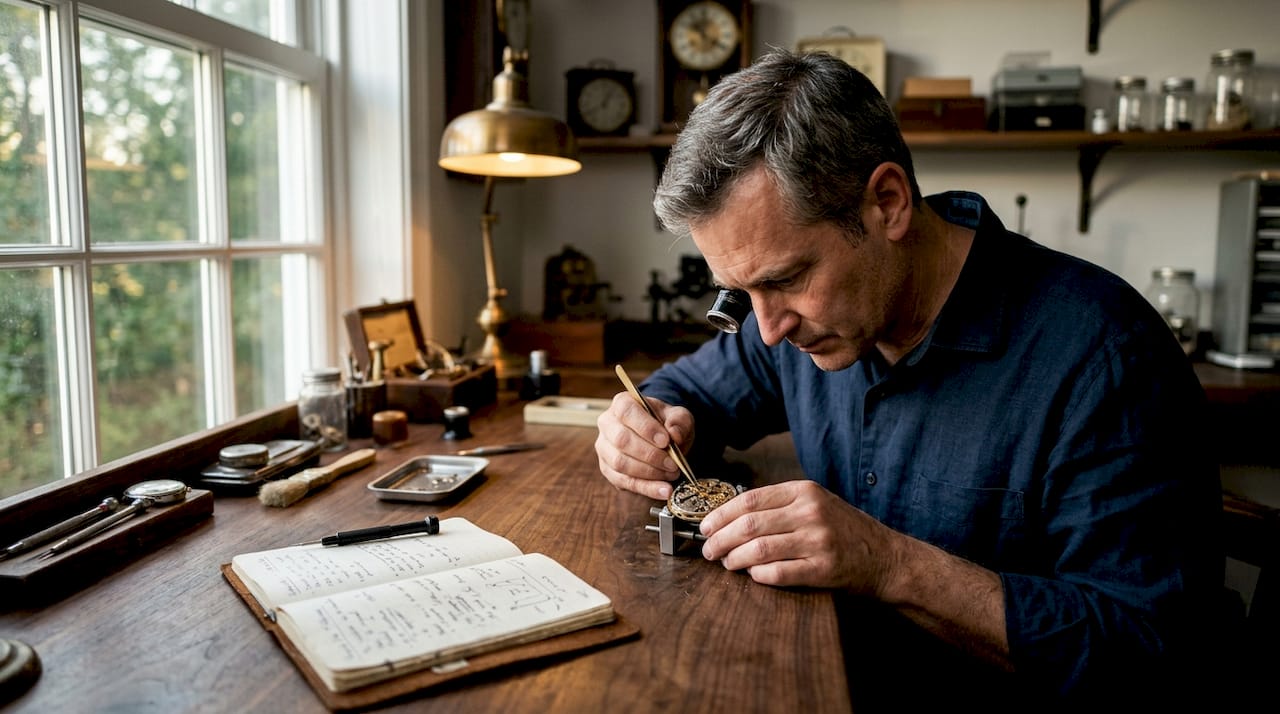
The diagnostic triage window exists to categorise faults before committing technician time. Without it, shops risk misdiagnosing a movement fault as a cosmetic issue, or vice versa. Siloed QA steps increase costs and create inefficiencies that compound across a high-volume repair operation.
Re-certification at the final stage is not a formality. It is the checkpoint that confirms every repair meets the agreed standard before the watch leaves your bench. Without it, you are relying on the technician’s memory rather than a documented result.
Pro Tip: Integrate a CMMS-compatible real-time status tracker into your workflow. Linking each repair ticket to its current stage gives managers instant visibility and prevents bottlenecks from going unnoticed until they become SLA breaches.
| Workflow stage | Target timeframe | Purpose |
|---|---|---|
| Return authorisation | Same day | Confirm receipt and assign ticket |
| Diagnostic triage | 3–7 business days | Classify fault and approve quote |
| Movement-level repair | 10–15 days | Execute and document repair |
| Final re-certification | Before dispatch | Verify all quality checks passed |
2. How does proactive communication enhance watch repair QA?
Proactive communication is foundational in quality assurance. It reduces customer frustration and frees staff to focus on technical work rather than fielding status calls. The shift from reactive phone calls to automated real-time updates is one of the highest-return changes a repair business can make.
Four communication touchpoints cover the full repair cycle: intake confirmation, quote approval, “waiting on parts” notification, and ready-for-collection alert. Each touchpoint removes a reason for the customer to call the front desk. That reduction in inbound enquiries directly protects technician focus time.
Automated repair status updates significantly reduce front desk workload and prevent customer dissatisfaction by keeping clients informed at every stage of the repair process.
A well-implemented customer update system also creates an audit trail. Every notification sent and approved is timestamped, which protects the business in any dispute over authorisation or timeline.
Pro Tip: Implement SMS-based quote approval workflows. Customers respond faster to a text than to an email, and a digital approval record removes any ambiguity about whether a repair was authorised.
3. What testing techniques meet professional watch repair standards?
Multi-stage inspection is the technical core of quality control in watch servicing. Professional QA involves a visual check at approximately 12 inches, alignment and tactile mechanism evaluation, automated timing tests across multiple positions, and water resistance testing in a pressure chamber. Each test targets a different failure mode.
Visual inspection at 12 inches replicates the distance at which a customer first examines their watch. It catches dial scratches, misaligned hands, and case finishing defects that closer inspection can miss through familiarity. Tactile checks confirm crown action, pusher resistance, and clasp engagement.
Timing tests must cover multiple positions because a movement that runs accurately dial-up may drift significantly dial-down. Amplitude and beat error readings in at least five positions give a complete picture of movement health. Water resistance testing in a pressure chamber is non-negotiable for any watch carrying a water resistance rating.
Premium standards such as the Patek Philippe Seal require 100% inspection of every piece. That benchmark is worth adopting as a shop standard, not just reserving for high-end brands.
| Inspection method | Basic approach | Advanced approach |
|---|---|---|
| Visual check | Naked eye, single position | 12-inch distance, multiple angles, loupe |
| Timing test | Single position daily rate | Multi-position amplitude and beat error |
| Water resistance | Visual seal check | Pressure chamber test |
| Winder/cyclo test | Not performed | 24+ hour automated run with fault logging |
Pro Tip: Log every timing result against the repair ticket ID. A single reading tells you the watch passed today. A logged history tells you whether a fault is intermittent, which is the only way to catch problems that appear after the customer collects the watch.
4. Why does 24-hour winder testing matter for fault detection?
Cyclo or winder testing running for at least 24 hours detects intermittent faults that instantaneous daily rate checks miss entirely. A movement can pass a five-minute timing test and still exhibit a fault that only appears after two hours of continuous running. This is the most common source of “it stopped again” complaints.
The mechanism behind this is straightforward. Worn components or marginal lubrication can perform adequately under low stress but fail under sustained load. A 24-hour winder replicates real-world wear conditions in a controlled environment. Logging the result against the ticket ID creates a permanent record that supports warranty claims and parts ordering accuracy.
Proper logging of serial numbers and repair history is also the backbone of any warranty system. Without it, you cannot verify which parts were fitted, when, or by whom. That gap destroys the credibility of any warranty you offer.
5. How should logistics and parts management support watch repair QA?
Logistics is not separate from quality assurance. A watch that arrives damaged in transit, or fails to arrive at all, represents a QA failure regardless of how well the repair was executed. Royal Mail Special Delivery Guaranteed is the UK gold standard for secure watch logistics, with standard compensation up to £750 and base rates starting at £9.45 for items up to 100g.
For high-value pieces, standard Royal Mail compensation is insufficient. Third-party transit insurance at approximately 0.6% of declared value covers the gap. A watch valued at £2,000 costs around £12 to insure in transit. That cost is negligible against the liability of an uninsured loss.
Watch repair logistics best practices also include regional return authorisation centres that reduce transit time and prevent the 9–14 day delays that occur when watches must travel to a single central facility. Parts availability at the regional level directly affects whether a repair meets its 10–15 day SLA.
Pro Tip: Integrate logistics tracking into your repair management system. When a watch’s transit status updates automatically against its ticket, your team knows immediately if a delivery has stalled, and can act before the SLA is breached.
6. What qualifications and certifications underpin watch repair quality?
Technician credentials are a direct indicator of repair quality. Brand-specific training, horology certifications, and formal apprenticeships each develop different competencies. A technician trained on a specific calibre will diagnose its common faults faster and more accurately than one relying on general experience alone.
Sales experience does not transfer to repair competence. A shop owner who has sold watches for twenty years but never trained a technician formally is not in a position to evaluate repair quality. The two disciplines require entirely different knowledge bases.
Warranty policy transparency is an equally important quality indicator. Strong warranty policies specify coverage, exclusions, duration, and service conditions. Vague warranties signal that the business has not thought carefully about what it is guaranteeing.
Warranty clarity beats social proof for building customer confidence in a repair shop. A customer who understands exactly what is covered and for how long trusts the business more than one who has only read positive reviews.
Documentation practices complete the picture. A shop that records the technician’s name, the parts fitted, and the test results for every repair has built accountability into its process. That accountability is what separates a professional operation from one that relies on goodwill.
Key takeaways
Watch repair quality assurance requires structured workflows, multi-stage testing, proactive communication, and certified technicians working within documented, accountable processes.
| Point | Details |
|---|---|
| Structured workflow stages | Follow a four-stage process: authorisation, triage, repair, and re-certification to prevent costly errors. |
| 24-hour winder testing | Run cyclo tests for at least 24 hours and log results against ticket IDs to catch intermittent faults. |
| Proactive communication | Automate status updates at four key touchpoints to reduce front-desk burden and protect authorisation records. |
| Insured logistics | Use Royal Mail Special Delivery with third-party insurance at approximately 0.6% of declared value for high-value watches. |
| Certified technicians | Require brand-specific training and formal credentials, and back every repair with a clearly documented warranty policy. |
What I have learned about QA in watch repair
The most common mistake I see in watch repair businesses is treating quality assurance as a final check rather than a process that runs from intake to dispatch. Shops that bolt QA onto the end of a repair are essentially hoping the technician got it right. Shops that integrate QA at every stage are building a system that catches errors before they reach the customer.
Speed is the other pressure point. There is a real temptation to compress timelines when a customer is waiting, but prioritising speed over thoroughness risks bypassing pressure chamber verification and positional amplitude checks. Those are not optional extras. They are the tests that prevent a watch from coming back within a week.
The businesses I have seen build genuine customer loyalty are the ones that communicate well and document everything. A customer who receives an SMS at every stage of their repair and collects a watch with a clear warranty document is a customer who comes back. The technical work matters, but the experience around it is what they remember.
Digital automation and data tracking are the next frontier for QA in this trade. Shops that log timing results, transit data, and communication history against every ticket will have the evidence base to improve continuously. That is not a future ambition. The tools exist now.
— efe
How Watchrepairstation supports professional quality assurance
Watchrepairstation has operated as a trade-to-trade watch repair specialist since 2008, built specifically to help watch and jewellery shops maintain service quality without absorbing the cost of long wait times or failed repairs.
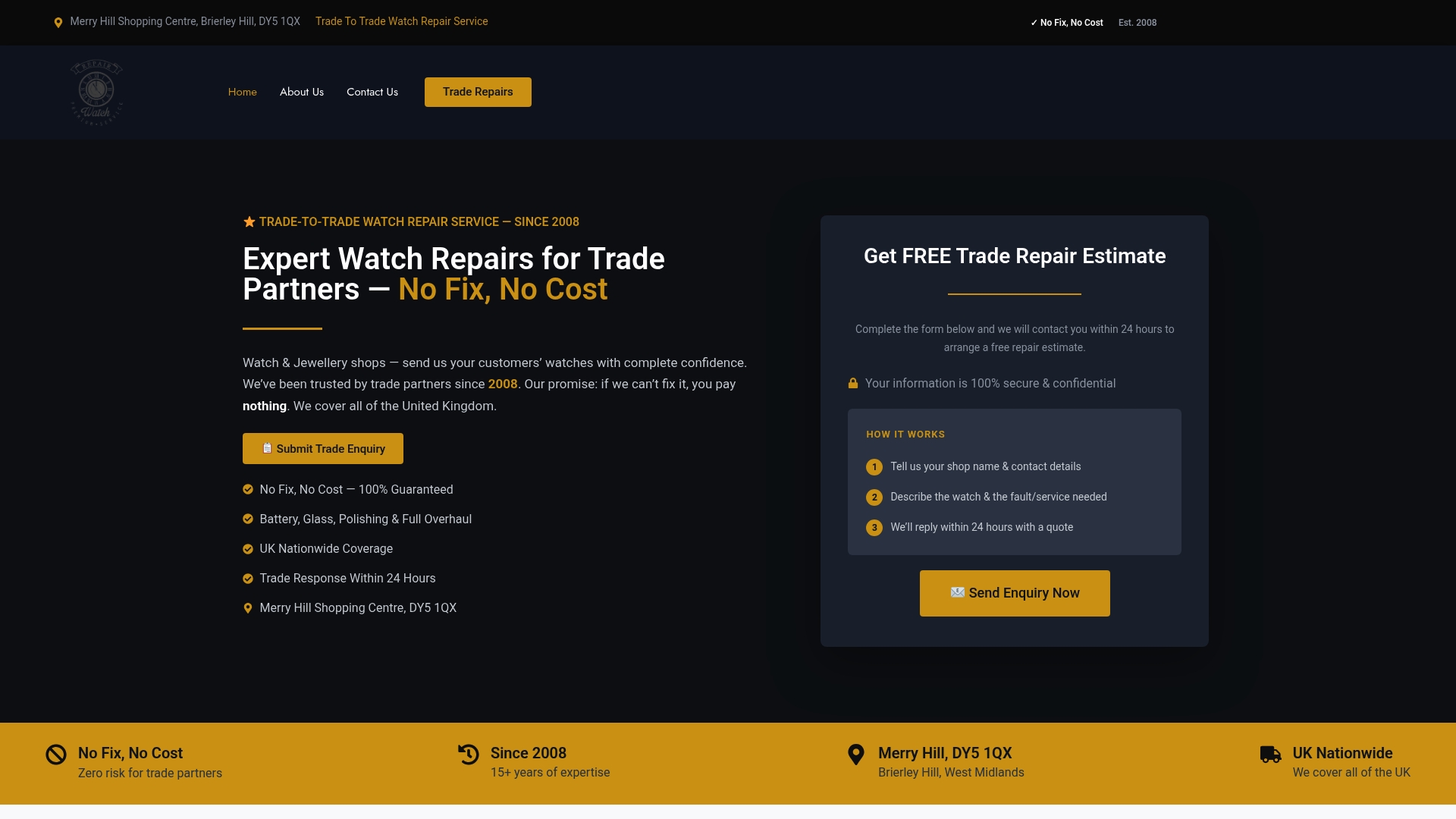
Every repair handled by Watchrepairstation goes through certified technicians with brand-specific training, and the “No Fix, No Cost” guarantee removes financial risk from partnering shops entirely. The watch repair service covers battery installation, movement repairs, and full overhauls, with real-time status updates built into the process so your front desk always knows where a customer’s watch stands. Regional logistics and parts availability mean repairs meet SLA targets rather than stalling in transit. For shops that need a reliable trade partner to protect their reputation and retain their customers, Watchrepairstation delivers the operational consistency that in-house repair often cannot.
FAQ
What is a standard repair SLA for watch servicing?
A movement-level repair SLA of 10–15 business days is the recognised benchmark for professional watch servicing. Diagnostic triage should be completed within 3–7 business days before the repair clock begins.
How does proactive communication reduce customer complaints?
Automated status updates at intake, quote approval, parts-waiting, and collection stages remove the main reasons customers call to chase a repair. This reduces front-desk workload and prevents dissatisfaction before it develops.
Why is 24-hour winder testing necessary after a watch repair?
A 24-hour cyclo or winder test replicates real-world wear conditions and detects intermittent faults that a short timing check cannot identify. Logging results against the repair ticket also supports warranty claims and parts traceability.
What is the recommended logistics standard for postal watch repairs in the UK?
Royal Mail Special Delivery Guaranteed is the UK gold standard, offering compensation up to £750. For watches valued above that threshold, third-party transit insurance at approximately 0.6% of declared value is the recommended supplement.
What should a watch repair warranty policy include?
A credible warranty policy specifies coverage scope, exclusions, duration, and service conditions in writing. Vague or verbal warranties do not provide the clarity that builds customer trust or protects the business in a dispute.

Leave a Reply