

Outsourcing watch repairs reliably is the practice of delegating servicing and repair work to accredited third-party specialists, allowing watch and jewellery shop owners to deliver faster turnaround times, consistent quality, and stronger customer satisfaction without the overhead of an in-house bench. The industry standard for a reliable outsourcing arrangement includes a 12-month workmanship warranty, genuine parts, and an estimate response within 1–2 working days. Watchrepairstation has operated this trade-to-trade model since 2008, offering UK retailers a “No Fix, No Cost” guarantee that removes financial risk entirely. Getting this right means understanding which partners meet the right technical standards, how to build an efficient workflow, and where most retailers go wrong.
What qualifications should a reliable watch repair outsourcing partner meet?
The most important criterion when selecting a repair partner is accreditation, not price. Manufacturer-direct service centres handle in-warranty watches and preserve the original warranty, but their turnaround can reach 20–30 weeks. That is a long time to keep a customer waiting. Accredited independents typically complete the same work in 4–6 weeks, at 20–30% lower cost, using genuine parts sourced through authorised channels.
The three main categories of service provider are manufacturer-direct centres, accredited independents, and specialist independents. The right choice depends on the watch’s warranty status, brand, and value. For out-of-warranty or vintage pieces, an accredited independent is almost always the better option for your customer and your margin.
Technical certifications to look for include membership of the British Horological Institute (BHI), the CW21 qualification, and WOSTEP-trained technicians. These are recognised industry benchmarks that confirm a technician can work to manufacturer-standard tolerances. A partner without any of these credentials is a risk to your reputation.

Quality control processes matter as much as qualifications. A trustworthy repair partner will carry out magnification inspection of movement components and pressure testing on water-resistant cases as standard. These quality control checks protect the watch movement and protect you from comeback repairs.
Key criteria to verify before committing to a partner:
- BHI membership, CW21, or WOSTEP-trained technicians on staff
- Use of genuine, manufacturer-sourced parts only
- Written warranty of at least 12 months on all workmanship, with some accredited providers offering up to 24 months
- Documented quality control steps including magnification inspection and pressure testing
- A clear “No Fix, No Cost” or equivalent policy to protect your cash flow
Pro Tip: Ask any prospective partner to show you a sample repair report. A professional workshop will document every stage of the job, from initial assessment to final quality check. If they cannot produce one, walk away.
How to set up an efficient outsourcing workflow
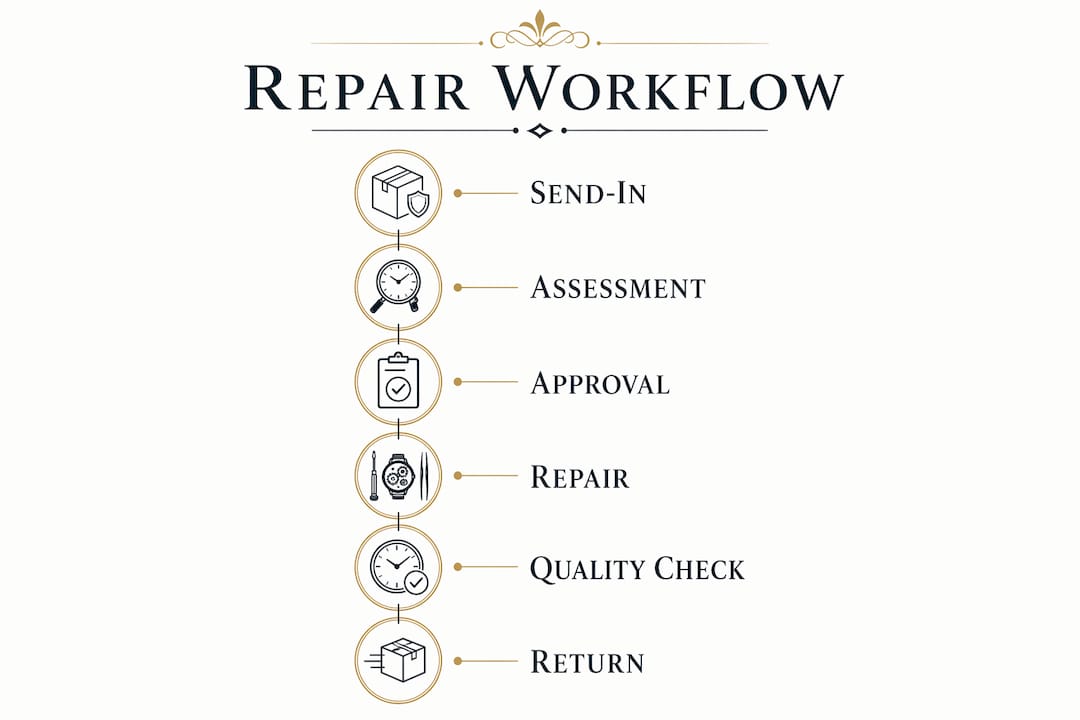
A reliable outsourcing process follows a consistent sequence every time. Skipping steps creates delays, disputes, and unhappy customers.
- Initial inquiry. Send the repair partner clear photos of the watch, the movement reference if accessible, and a description of the fault. The more detail you provide, the more accurate the estimate.
- Estimate receipt. A professional partner returns a written estimate within 1–2 working days. This is the industry benchmark. Longer than two days suggests capacity or process problems.
- Customer approval. Present the estimate to your customer and obtain written or recorded approval before proceeding. This protects you from disputes later.
- Secure shipment. Pack the watch with adequate padding and use a tracked, insured courier service. Record the tracking number against the job in your system.
- Repair and progress tracking. A good partner will update you at key stages. Assign one member of staff to own each outsourced job and chase updates proactively.
- Return and inspection. When the watch returns, inspect it against the repair report before contacting the customer. Confirm the fault is resolved and the case is clean.
- Customer collection. Hand over with the written warranty document and a brief explanation of the work completed. This builds trust and encourages repeat business.
The table below shows typical turnaround times by job type, which you can use to set accurate customer expectations.
| Job type | Typical turnaround |
|---|---|
| Battery replacement | 1–2 days |
| Basic service and regulation | 1–2 weeks |
| Full movement overhaul | 4–6 weeks |
| Complex or vintage movement | Up to 6 weeks or longer |
Digital communication channels such as WhatsApp and dedicated text lines significantly speed up estimate delivery and status updates. Watchrepairstation uses this approach to keep partner shops informed without requiring phone calls during busy retail hours.
Pro Tip: Create a simple repair log spreadsheet with columns for job reference, customer name, date sent, estimated return, and status. Review it every Monday morning. You will catch delays before your customer does.
What are the strategic business benefits of outsourcing watch repairs?
Outsourcing transforms fixed bench costs into a variable expense. You pay for repairs when you have them, not for a technician’s salary and equipment during quiet months. That shift alone can protect your margin through seasonal dips.
Watch servicing is also evolving from a cost overhead into a profit and loyalty engine. Retailers who integrate repair services into their customer offer retain more customers and generate repeat footfall. A customer who trusts you with a repair is far more likely to buy their next watch from you.
The specific business benefits of outsourcing include:
- No capital expenditure. No bench equipment, no specialist tools, no training costs.
- Scalable capacity. Send one watch or fifty. Your overhead does not change.
- Reduced hiring risk. Skilled watchmakers are scarce. Outsourcing removes the recruitment and retention problem entirely.
- Faster turnaround than in-house. A dedicated repair workshop processes jobs faster than a part-time bench technician managing retail duties simultaneously.
- Reputation protection. A partner with a “No Fix, No Cost” policy means you never charge a customer for a repair that did not work.
The operational risks of in-house repair include bench downtime when a technician is absent, the cost of replacing specialist equipment, and the liability of an undertrained repairer damaging a valuable movement. Outsourcing removes all three. For most independent retailers, the numbers favour outsourcing decisively.
How can retailers manage communication during outsourced repairs?
Clear communication is the single biggest factor in customer satisfaction during a repair. Customers do not mind waiting if they know what is happening. They do mind being ignored.
Assigning a dedicated staff member to track repair status prevents the most common failure: a watch sitting in a queue with no one chasing it. That person owns the job from intake to collection. They send the update, they field the customer’s question, and they escalate if a deadline is at risk.
Best practices for managing customer communication:
- Set a realistic collection date at intake, based on the job type turnaround table above. Add a buffer of three to five days.
- Send a proactive update at the midpoint of the expected repair window, even if there is no news. Silence reads as a problem.
- Address warranty and parts authenticity questions upfront. Customers ask these questions. Having a clear answer ready builds confidence.
- Use a customer update system to log every communication. If a dispute arises, your records protect you.
Pro Tip: Draft three standard message templates: one for “repair received and sent to workshop,” one for “repair in progress, on track,” and one for “repair complete, ready to collect.” Sending these consistently takes less than two minutes per job and eliminates most customer anxiety.
What are the common pitfalls in outsourcing watch repairs?
The most damaging mistake is choosing a repair partner based on price alone. A low quote often means non-genuine parts, undertrained technicians, or skipped quality control steps. Non-genuine parts and improper servicing damage the watch movement and, eventually, your reputation with the customer who trusted you.
Common pitfalls to avoid:
- Skipping accreditation checks. Never assume a workshop is qualified. Ask for evidence of BHI membership, CW21, or WOSTEP training before sending a single job.
- No written warranty agreement. Always confirm the warranty terms in writing before the repair begins. Verbal agreements are unenforceable.
- Poor shipment practices. Uninsured or poorly packaged watches get damaged in transit. The liability falls on you.
- No single point of contact. When multiple staff members manage the same repair job, updates get missed and customers get contradictory information.
- Ignoring comeback rates. Track how often a partner’s repairs return with the same fault. A high comeback rate is a clear signal to change provider.
“The retailers who struggle most with outsourced repairs are the ones who treat it as a transaction rather than a relationship. A repair partner who knows your customer base, your typical stock, and your standards will consistently outperform one you found on price alone. Invest time in onboarding your partner properly, and the returns compound over months and years.”
Verifying genuine parts is non-negotiable. Ask your partner to confirm in writing that all replacement components are sourced through authorised channels. Quality control steps such as magnification inspection and pressure testing should be standard, not optional extras.
Key takeaways
Retailers who outsource watch repairs reliably gain faster turnaround times, lower overheads, and stronger customer loyalty by partnering with accredited specialists who use genuine parts and offer a documented warranty.
| Point | Details |
|---|---|
| Accreditation is non-negotiable | Verify BHI, CW21, or WOSTEP credentials before committing to any repair partner. |
| Turnaround times vary by job type | Basic servicing takes 1–2 weeks; full overhauls typically take 4–6 weeks. |
| Fixed costs become variable | Outsourcing removes bench salaries and equipment costs, protecting margin in quiet periods. |
| Communication prevents complaints | Assign one staff member to own each outsourced job and send proactive updates. |
| Price alone is a poor selection criterion | Low quotes often signal non-genuine parts or skipped quality control steps. |
Why I think most retailers underestimate the relationship side of outsourcing
The operational case for outsourcing watch repairs is clear. What gets less attention is the relationship side, and that is where most retailers leave value on the table.
I have seen shops cycle through repair partners every year or two, always chasing a slightly lower quote. The hidden cost of that approach is enormous. Every new partner requires time to understand your stock, your customers’ expectations, and your communication preferences. That learning period costs you in slower turnarounds and avoidable errors.
The shops that get the most from outsourcing treat their repair partner as a dedicated extension of their business. They assign one member of staff to manage the relationship, they give feedback after every job, and they build a track record together. Over time, that partner prioritises their jobs, flags potential issues early, and delivers consistently. That consistency is what your customers actually experience.
Repair speed also has a direct effect on customer loyalty that most retailers underestimate. A customer who drops off a watch and collects it sooner than expected becomes an advocate. A customer who waits longer than promised becomes a complaint. The difference between those two outcomes often comes down to which repair partner you chose and how well you manage the process. Treat regular servicing as a customer retention tool, not an afterthought, and the commercial case becomes obvious.
— efe
Watchrepairstation: a trade partner built for UK retailers
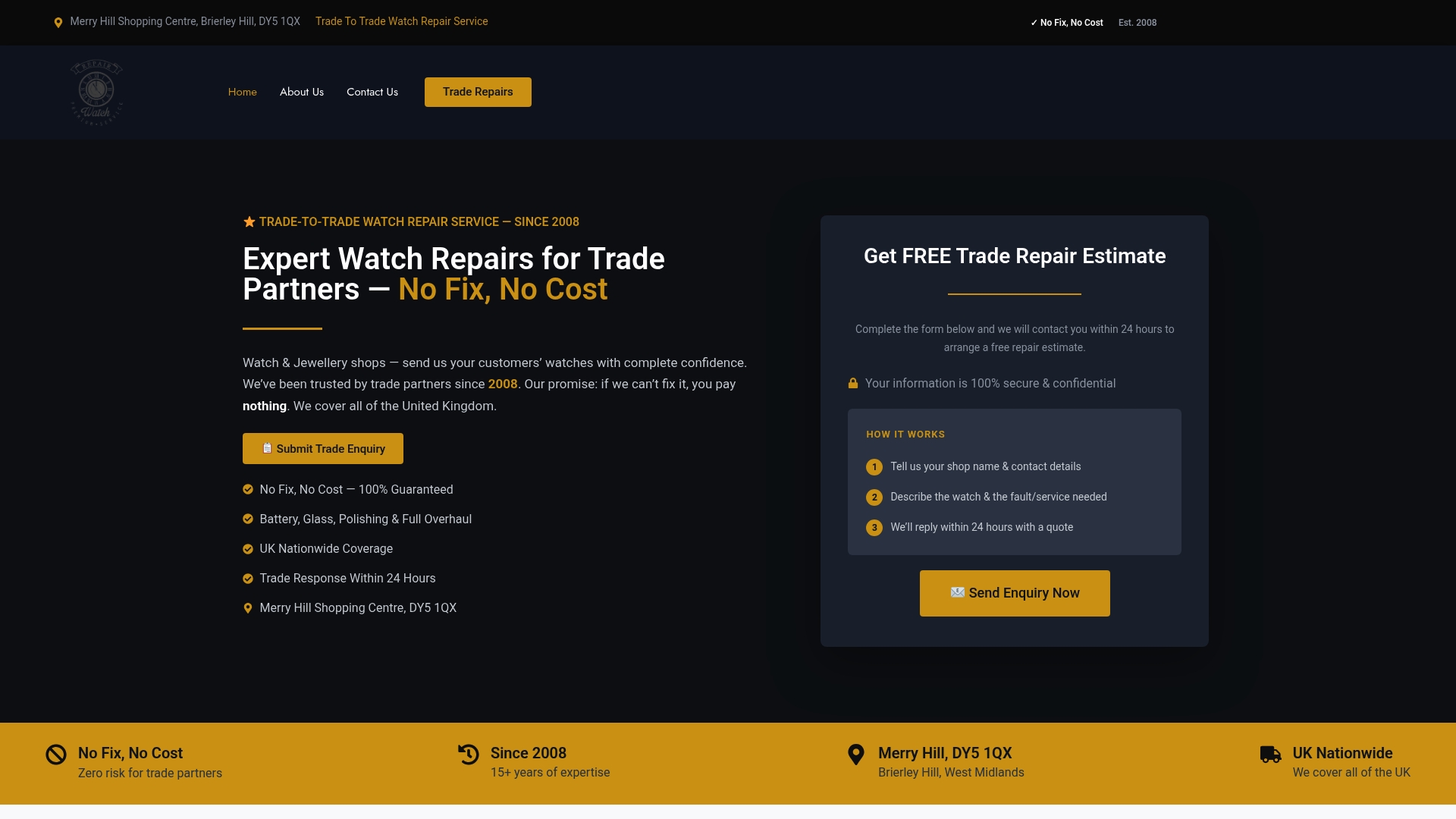
Watchrepairstation has provided trade-to-trade watch repair services to UK retailers since 2008, with a “No Fix, No Cost” guarantee that removes financial risk from every job. The workshop handles everything from battery replacements to full movement overhauls, using genuine parts and returning a 12-month workmanship warranty as standard. Estimates come back within 1–2 working days, and the trade-only focus means every technician is working exclusively on professional repair jobs. Retailers benefit from competitive trade pricing, fast turnaround, and a partner who understands the pressures of running a shop. Contact Watchrepairstation through the website to discuss a partnership that fits your repair volume and customer base.
FAQ
What does it mean to outsource watch repairs reliably?
Outsourcing watch repairs reliably means delegating servicing to an accredited third-party specialist who uses genuine parts, provides written estimates within 1–2 working days, and backs all work with a minimum 12-month warranty.
How long does an outsourced watch repair take?
Turnaround depends on the job type. Battery replacements and basic servicing typically complete within 1–2 weeks, while full movement overhauls take 4–6 weeks depending on movement complexity and part availability.
What accreditations should a watch repair partner hold?
Look for BHI membership, CW21 qualification, or WOSTEP-trained technicians. These are the recognised UK and international benchmarks for professional watchmaking competence.
How do I protect my customers during an outsourced repair?
Assign a dedicated staff member to track each job, send proactive updates at key stages, and always confirm the repair warranty in writing before the watch leaves your shop.
Is outsourcing watch repairs cost-effective for small retailers?
Outsourcing converts fixed bench and staffing costs into a variable expense, meaning small retailers pay only for the repairs they have. This protects margin during quiet periods and removes the risk of hiring and retaining a skilled watchmaker.

Leave a Reply