

Batch watch repair is defined as the process of managing multiple watches under a single administrative system while each watch receives individual servicing, tracking, and quality assurance. The term “batch repair” is the common trade shorthand; the recognised industry term is batch watch servicing, used by B2B service providers and luxury resellers across the UK. Commercial clients, including luxury pre-owned resellers, warranty outsourcers, and watch brands, submit batch orders of ten or more watches via dedicated B2B portals, receiving consolidated invoices after completion. Watchrepairstation has operated within this model since 2008, handling trade-to-trade repairs with a “No Fix, No Cost” guarantee that makes it a practical choice for volume clients.
What is batch watch repair and how does the workflow operate?
Batch watch servicing is a B2B service model where multiple watches are grouped under one batch ticket but tracked individually throughout the repair process. The administrative system does the heavy lifting: each watch carries its own serial number record, its own service history, and its own parts list. The batch ticket is the container; the individual watch record is the substance.
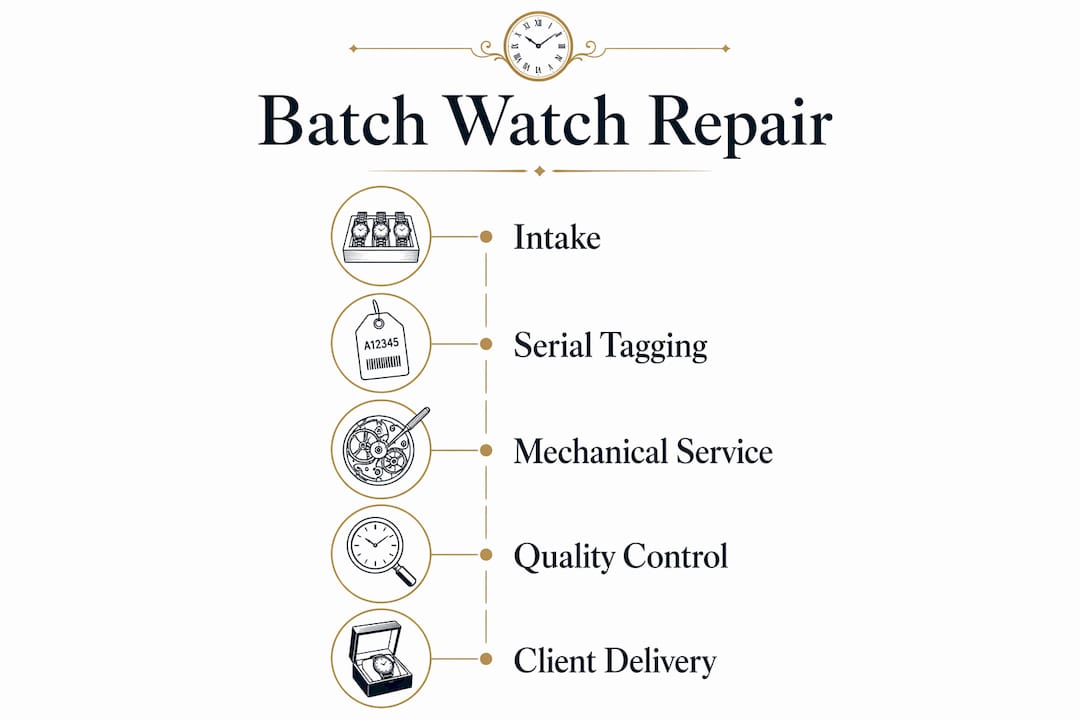
The workflow from intake to delivery follows a clear sequence:
- Batch submission. The client uploads watch details via a B2B portal, assigning each watch a serial number and specifying the required service level. Bulk uploads and status tracking of multiple watches reduce back-and-forth communications significantly.
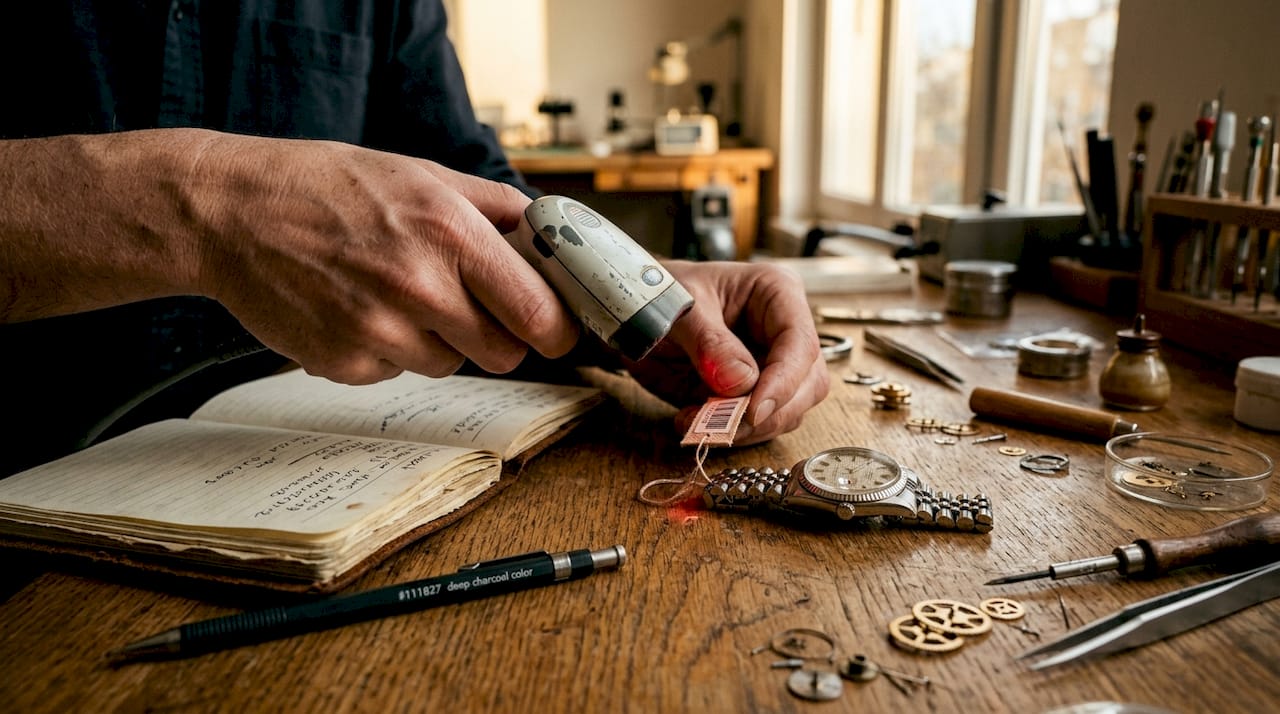
- Intake and tagging. Each watch receives a barcode or physical tag linked to its serial number. This prevents mix-ups during disassembly and parts ordering.
- Diagnosis and parts procurement. Technicians assess each watch individually. Parts are ordered against the specific serial number, not the batch as a whole.
- Service execution. Each watch goes through its full mechanical service. The batch structure does not compress the time spent on any individual piece.
- Quality control and reporting. Every watch is tested and photographed before return. Results are logged against the individual record within the batch ticket.
- Consolidated invoicing and return. The client receives one invoice covering the full batch, with individual service reports attached for each watch.
Pro Tip: Insist on serial-number-based tracking before committing to any batch repair provider. Without it, parts errors and mix-ups become a genuine operational risk across large batches.
Routine mechanical services typically take 2–4 weeks per watch. Complex or vintage repairs extend to 6–12 weeks. The batch structure does not change those timelines; it changes how the administration around them is managed.
What does batch watch repair involve mechanically?
Each watch in a batch receives the same full mechanical service it would receive as a standalone repair. The batch label is an administrative convenience, not a shortcut. A standard mechanical service inside a professional workshop covers the following steps:
- Initial assessment. The technician examines the watch for visible damage, tests timekeeping, and documents the condition before any work begins.
- Full disassembly. The movement is stripped to its component parts. Bridges, plates, wheels, and escapement components are separated and catalogued.
- Ultrasonic cleaning. Components are cleaned in an ultrasonic bath to remove old lubricants, dust, and oxidation. This step is non-negotiable for reliable reassembly.
- Lubrication. Each friction point receives the correct grade of lubricant. This step is the most time-sensitive: rushing lubrication risks failure within 5–7 years, making it the single most consequential step in the service.
- Regulation. The movement is adjusted for rate accuracy across multiple positions.
- Timing checks. Post-reassembly, the watch runs for 24–48 hours on a timing machine to confirm accuracy before the case is closed.
The entire process takes several hours per watch. That figure does not compress because ten watches are being serviced simultaneously in the same workshop. Efficiency in batch watch maintenance comes from logistics and administration, not from reducing the time a technician spends on each movement.
Simple three-hand movements with no complications complete the cycle faster than chronographs, perpetual calendars, or tourbillons. Vintage watches add further complexity: worn parts may require sourcing from specialist suppliers, and non-standard tolerances demand additional regulation time. A collector’s guide to complications gives a useful breakdown of how complication type affects service duration.
How is quality control managed in batch watch repair?
Quality control in batch watch servicing uses Acceptable Quality Limit (AQL) standards, the same framework applied in OEM watch manufacturing. AQL standards categorise defects into three classes: critical, major, and minor. A critical defect renders the watch non-functional or unsafe. A major defect affects performance but not safety. A minor defect is cosmetic and does not impair function.
Testing covers four core areas for every watch in the batch:
- Timekeeping accuracy. The watch must meet the rate tolerance agreed with the client before dispatch.
- Amplitude and power reserve. The movement must wind and run to its specified power reserve without drop-off.
- Water resistance. Pressure testing confirms the case seal is intact after reassembly.
- Mechanical functionality. All functions, including date setting, crown positions, and complications, are tested in sequence.
Photographic and digital reporting ties each test result to the individual serial number record. The client receives a complete report for every watch in the batch, not a single summary document. This transparency matters: when a defect is found, the client knows exactly which watch is affected and why.
Pro Tip: Pre-define your defect acceptance criteria with the repair provider before the batch is submitted. Miscommunication over repair criteria is the most common cause of delays in batch repair operations.
The quality assurance practices used in professional workshops mirror those applied in manufacturing, which is why luxury brands trust batch repair providers with warranty work.
What are the benefits and challenges of batch watch repair?
The benefits of batch watch repair are primarily administrative and logistical. For commercial clients managing ten or more watches at a time, the gains are concrete:
- Consolidated invoicing. One invoice replaces ten or more separate transactions, reducing accounting overhead.
- Single shipment tracking. One consignment covers the full batch, simplifying logistics and insurance.
- Faster status visibility. B2B portals give clients real-time status on every watch in the batch without requiring individual phone calls or emails.
- Predictable pricing. Volume agreements allow clients to forecast repair costs accurately across a quarter or a financial year.
The challenges are equally concrete. Without serial-number-based tracking, parts errors compound across a batch. One misidentified movement can delay the entire consignment. Unclear repair standards between client and provider create disputes over what constitutes an acceptable finish, particularly on pre-owned luxury pieces where cosmetic condition affects resale value.
Batch watch repair is the fastest-growing sector in watch servicing, driven by luxury pre-owned market expansion and the outsourcing of warranty work by brands. That growth creates opportunity, but it also raises the stakes for providers who lack the administrative infrastructure to manage volume without errors.
How can watch repair businesses implement batch watch servicing?
Adopting batch watch repair as a service offering requires investment in systems before it requires investment in bench space. The workflow depends on administration being correct before any mechanical work begins.
- Invest in repair management software with a B2B portal. The portal handles bulk submissions, status updates, and consolidated invoicing. Without it, batch repair creates more administration than it removes.
- Establish written quality and repair standards with each client. Define defect categories, cosmetic acceptance criteria, and escalation procedures before the first batch arrives. This prevents the most common source of delays.
- Implement serial-number tracking and barcode logistics. Every watch must carry a unique identifier from intake to dispatch. Barcode scanning at each workflow stage creates an audit trail that protects both the provider and the client.
- Train staff on individual attention within batch workflows. Technicians must understand that batch handling changes the paperwork, not the bench work. Each watch receives its full service regardless of batch size.
- Position batch repair as a competitive advantage with luxury clients. Luxury resellers and warranty providers need a partner who can handle volume without compromising quality. A reliable outsource partner with proven batch capability commands stronger client relationships and repeat business.
The regular servicing guide from Watchrepairstation provides additional context on service intervals, which helps batch clients plan submission schedules across their inventory.
Key takeaways
Batch watch repair delivers administrative and logistical efficiency without reducing the individual mechanical attention each watch receives.
| Point | Details |
|---|---|
| Definition of batch repair | Multiple watches are managed under one batch ticket but each watch is individually tracked and fully serviced. |
| Mechanical work is not compressed | Each watch takes several hours of bench time; batch logistics change administration, not repair duration. |
| AQL standards govern quality | Defects are classified as critical, major, or minor, with individual test reports issued per watch. |
| Serial-number tracking is non-negotiable | Barcode-based logistics prevent parts errors and mix-ups across large batches. |
| Pre-agreed standards prevent delays | Defining defect acceptance criteria with the client before submission is the single most effective way to avoid batch disputes. |
The part of batch repair that most providers get wrong
The watch trade has embraced batch repair as a volume solution, and rightly so. The pre-owned luxury market is expanding, warranty outsourcing is growing, and brands need partners who can handle ten, twenty, or fifty watches at a time without losing control of quality. I have watched this sector develop over many years, and the pattern is consistent: providers who invest in administration first succeed, and those who treat batch repair as simply “more watches on the bench” run into trouble quickly.
The uncomfortable truth is that batch repair is harder to manage than individual repair, not easier. The efficiency is real, but it lives entirely in the logistics layer. The moment a serial number is misread at intake, or a parts order is raised against the wrong record, the entire batch is at risk. I have seen batches of thirty watches delayed by a single administrative error that would have been caught immediately on a one-to-one job.
The other lesson worth stating plainly: quality control documentation is not optional in batch repair. Clients who send twenty watches need twenty individual reports. A single summary document does not protect the provider when a client disputes a finish, and it does not protect the client when a watch comes back with an unresolved fault. Digital reporting tied to serial numbers is the standard, and providers who have not adopted it are operating below the level the market now expects.
Watchrepairstation has built its batch capability around exactly these principles since 2008. The “No Fix, No Cost” guarantee only works at volume if the administration behind it is watertight.
— efe
Watchrepairstation’s batch watch repair service for trade clients
Watchrepairstation has provided trade watch repair services across the UK since 2008, with a specific focus on B2B clients managing volume repair needs. The service covers everything from battery installation and movement servicing to full overhauls, all handled by expert technicians under the “No Fix, No Cost” guarantee.
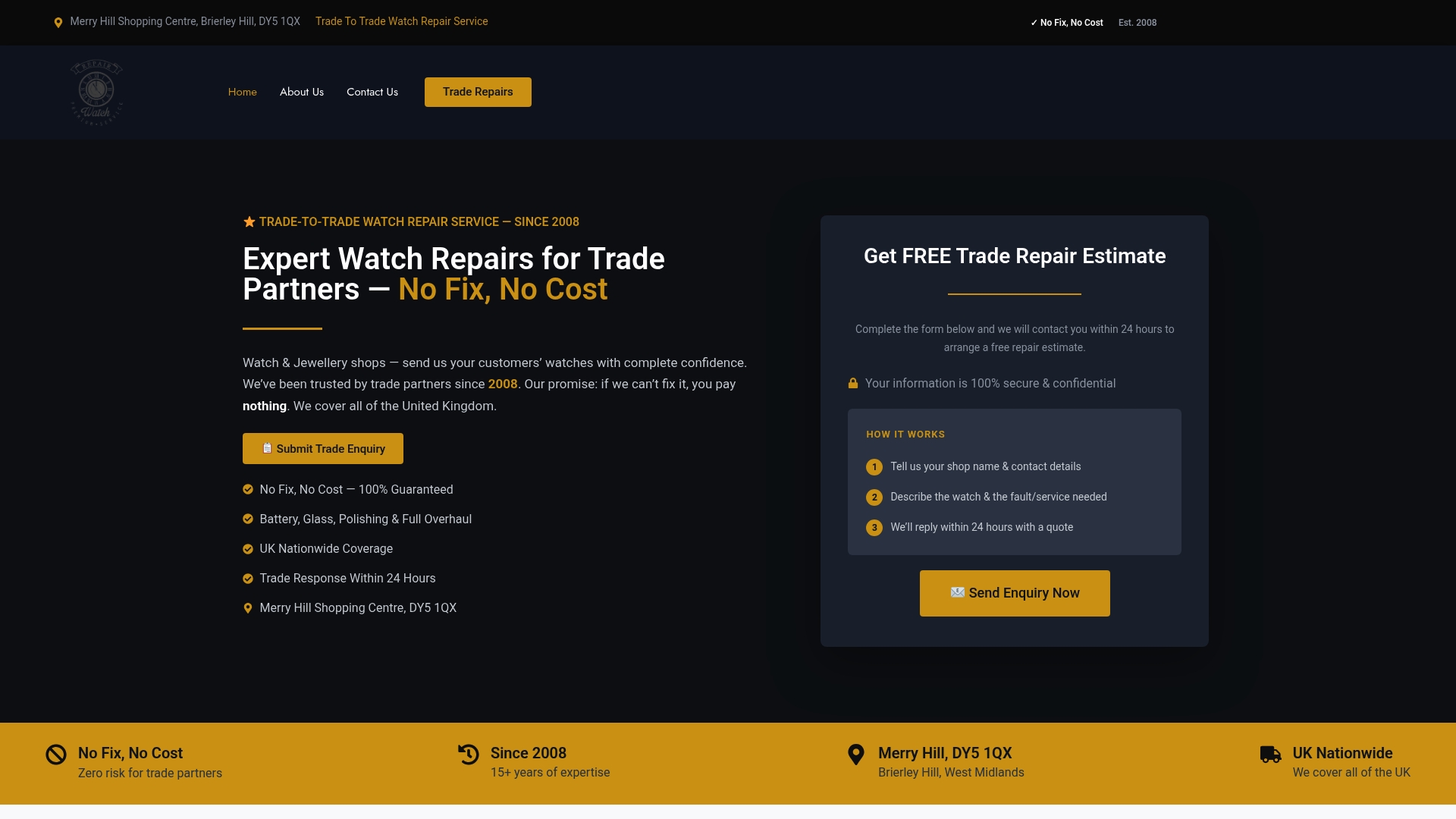
For luxury resellers, warranty providers, and watch retailers managing multiple pieces at once, Watchrepairstation offers consolidated invoicing, individual serial-number tracking, and fast turnaround times that protect your client relationships. Every watch in your batch receives the same standard of care as a standalone repair, with full digital reporting on completion. Contact Watchrepairstation to discuss your batch servicing requirements and find out how the trade-only model works for your business.
FAQ
What is batch watch repair in simple terms?
Batch watch repair is the process of submitting multiple watches to a repair provider under one administrative order, where each watch is individually serviced and tracked. It is a B2B model used by retailers, resellers, and brands to manage volume repairs efficiently.
Is batch watch servicing faster than individual repair?
The mechanical repair time per watch does not change in a batch. Efficiency comes from consolidated administration, single shipments, and unified invoicing rather than from speeding up the bench work.
How are watches tracked within a batch repair order?
Each watch is assigned a unique serial number at intake, linked to a barcode or physical tag. This record follows the watch through diagnosis, parts ordering, servicing, and quality control to prevent mix-ups.
What quality standards apply to batch watch repair?
Batch repair providers use Acceptable Quality Limit (AQL) standards, classifying defects as critical, major, or minor. Each watch is tested for timekeeping accuracy, water resistance, amplitude, and mechanical functionality before return.
How many watches are needed to use a batch repair service?
Most B2B batch repair providers accept orders from ten watches upwards. Watchrepairstation works with trade clients across the UK and structures batch agreements around the client’s volume and service requirements.

Leave a Reply