

A watch repair bottlenecks checklist is a systematic set of actions that identifies and resolves the most common delays in a repair workflow, directly improving shop efficiency and customer satisfaction. Routine mechanical watch servicing typically takes 2–4 weeks, yet complex restorations involving parts sourcing can stretch beyond three months. The three leading causes of delays are parts availability for vintage calibres, excessive backlog from extended warranties, and a shortage of specialised tooling. Shop owners who address these causes systematically, rather than reactively, cut turnaround times and protect their reputation. This guide gives you a practical, technician-validated checklist to do exactly that.
1. What are the key intake checklist items that reduce repair delays?
Poor intake documentation is the biggest hidden bottleneck in most shops. When technicians must stop work to re-verify watch details, service time can double. A disciplined intake process eliminates that wasted time before it starts.
Every intake record must include the serial number as a unique identifier. Serial numbers link the watch to its movement calibre, service history, and parts compatibility, which removes guesswork from the diagnostic stage entirely.

A written repair estimate, approved by the customer before work begins, prevents scope creep. Written estimates lower customer disputes and give technicians a clear, agreed scope. Without one, repairs stall in a “pending approval” state for days or weeks.
Document the functional condition at intake: timing loss in seconds per day, crown function, crystal condition, and water resistance status. This baseline means any technician can pick up the job without a briefing from the original intake person.
Finally, log every part linked to the repair ticket. Parts tracking tied to the ticket and repair history prevents duplicate ordering and flags sourcing delays early.
Pro Tip: Use a standardised digital intake form with mandatory fields. If a field is left blank, the form should not submit. This forces completeness at the point of intake, not after the watch is already on the bench.
2. How can batch processing ease watch repair backlogs?
Sporadic workflow is a silent efficiency killer. When a technician switches between a Rolex calibre 3135, an ETA 2824, and a vintage pocket watch movement in the same session, each switch requires a full tooling reset and a mental context change. That adds up to significant lost time across a working week.
Batching watches by calibre or tooling requirements prevents repeated machine resetting and shortens overall repair workflows. Group all movements of the same type together and service them in sequence. The first watch in the batch absorbs the setup cost; every subsequent watch benefits from it.
Limiting work-in-progress (WIP) to a manageable volume also reduces errors. When a technician has fifteen open jobs simultaneously, cognitive load increases and small mistakes multiply. A strict WIP limit, typically four to six active jobs per bench, keeps focus sharp.
Lubricant degradation is another reason to avoid long queues. Lubricants in watch movements have a functional lifespan of 5–7 years. A watch sitting in a backlog queue past its service interval will require a full cleaning and overhaul rather than a standard service, adding cost and time.
- Group movements by calibre family before scheduling bench time.
- Set a hard WIP limit per technician and enforce it daily.
- Flag any watch approaching its lubricant service deadline for priority scheduling.
- Use a physical or digital queue board to make WIP visible to the whole team.
Pro Tip: Colour-code your repair tickets by movement type. A quick visual scan of the bench tells you immediately whether your technician is working efficiently within a batch or mixing job types unnecessarily.
3. What role does specialised digital software play?
Generic electronics repair software creates significant workflow inefficiencies in a watch repair environment. Watch repair timelines depend on technical stages such as drying lubricants or awaiting specific parts, not simple task throughput. Generic tools cannot model these watch-specific stages, which leads to inaccurate status updates and missed deadlines.
Specialised watch repair software tracks serial numbers, warranty status, repair history, and parts per movement calibre in a single record. That level of detail means any team member can answer a customer query accurately without pulling the watch from the bench. It also means parts orders are linked to specific tickets, so sourcing delays are visible before they become critical.
The table below shows how the two approaches compare across the features that matter most to shop managers.
| Feature | Generic repair software | Watch-specific software |
|---|---|---|
| Serial number tracking | Basic or absent | Full, linked to calibre records |
| Movement-specific parts log | Not supported | Built-in per calibre |
| Lubricant service interval alerts | Not available | Automated reminders |
| Customer status notifications | Generic SMS only | Stage-specific updates |
| Warranty status tracking | Manual entry | Integrated with repair history |
Watchrepairstation uses digital tracking that links each repair to its full service history, giving partner shops accurate turnaround estimates and reducing the back-and-forth that slows down trade repairs. For shops evaluating their options, the watch repair quality assurance guide from Watchrepairstation outlines the intake and tracking procedures that underpin consistent results.
4. How does proactive customer communication prevent abandoned repairs?
The luxury watch industry faces a genuine service crisis driven by turnaround times that are misaligned with customer expectations. Shops that fail to communicate proactively lose customers to abandonment, disputes, and negative reviews. The fix is not faster repairs alone. It is clearer communication at every stage.
Scope creep from non-approved additional repairs causes watches to sit idle in a “pending communication” state for weeks. Standardised digital intake forms requiring customer approval before any additional work begins eliminate this delay entirely.
A structured communication policy covers four moments: intake confirmation, diagnosis completion, parts arrival, and collection readiness. Each message takes under two minutes to send and removes the customer’s need to chase your shop for updates.
- Send an intake confirmation within one hour of receiving the watch.
- Issue a written diagnosis and estimate within 48 hours.
- Notify the customer immediately when parts arrive or when delays occur.
- Confirm collection readiness with a clear pickup window.
Waiting for customer approval before starting expensive repairs is not just good practice. It is the single most effective way to prevent a watch from sitting idle on your bench for two weeks while you wait for a decision. The customer update system guide from Watchrepairstation covers how to build this process into your daily workflow.
5. What are the most common watch repair bottlenecks and how do you fix them?
Every shop faces a predictable set of recurring delays. Naming them precisely is the first step to resolving them.
1. Parts scarcity for vintage calibres. Sourcing vintage components often requires fabrication, which adds 2–4 hours per piece to the timeline. The fix is a pre-approved parts supplier list and a standing order for the most commonly needed vintage components in your shop’s typical job mix.
2. Warranty backlog overflow. Extended manufacturer warranties push customers towards authorised service centres, but independent shops absorb the overflow. Repair triaging by urgency and complexity prevents this overflow from collapsing your entire queue.
3. Lubricant degradation from delayed servicing. A watch serviced past its 5–7 year interval requires a full overhaul rather than a standard service. Catching these at intake and pricing them correctly prevents mid-job surprises that stall the workflow.
4. Specialised tooling shortages. Complicated movements, particularly those with co-axial escapements or proprietary case backs, require tools that not every bench carries. Auditing your tooling inventory quarterly and cross-training technicians on shared tools reduces this bottleneck significantly.
5. Scope creep from incomplete intake. When the original intake record is vague, technicians discover additional faults mid-service and must pause to seek approval. A complete intake checklist, as described in point one, eliminates this almost entirely. The watch repair process at Watchrepairstation is built around this principle, with every job scoped and approved before bench work begins.
Key takeaways
A complete watch repair bottlenecks checklist covers intake documentation, batch processing, digital tracking, customer communication, and targeted fixes for the five most common delay causes.
| Point | Details |
|---|---|
| Intake documentation is critical | Log serial numbers, condition, and approved estimates before any bench work begins. |
| Batch by calibre to save time | Grouping movements by type eliminates tooling resets and reduces errors across the bench. |
| Use watch-specific software | Generic repair tools cannot model lubricant stages or movement-specific parts, causing avoidable delays. |
| Communicate at every stage | Four structured updates per repair prevent abandoned jobs and customer disputes. |
| Fix the five core bottlenecks | Parts scarcity, backlog overflow, lubricant degradation, tooling gaps, and scope creep each have a direct remedy. |
Why most shops fix the wrong bottleneck first
The shops I see struggle most are not short of skill. They are short of process. The technician is excellent, but the intake form is a scrap of paper, the parts order is in someone’s email inbox, and the customer last heard from the shop ten days ago. The watch sits idle not because the repair is difficult, but because the workflow around it has no structure.
The most common mistake is investing in faster bench tools before fixing the intake process. A technician who works 20% faster on a poorly documented job still stops three times to re-verify details. The time saving evaporates. Fix the intake first, then address tooling.
Batch processing is the second change that delivers the fastest return. I have seen shops cut their average bench time per watch by a meaningful margin simply by grouping calibres and setting a hard WIP limit. The technicians are not working harder. They are working without interruption.
The shops that recover fastest from backlog are the ones with a clear communication policy. Customers who receive regular updates rarely abandon repairs. Customers who hear nothing for two weeks often do. That abandoned repair costs you the parts you ordered, the bench time you spent, and the customer relationship. A two-minute SMS prevents all three.
If you are adopting new software, do it incrementally. Migrate intake forms first, then parts tracking, then customer notifications. Trying to change everything at once during a busy period creates more disruption than the software solves. The regular servicing guide from Watchrepairstation is a useful reference for setting realistic service interval expectations with your customers as you build out your communication process.
— efe
Watchrepairstation: watch repairs built around your workflow
Watchrepairstation has been handling trade-to-trade watch repairs across the UK since 2008, and the checklist principles in this article are built into every job we take on.
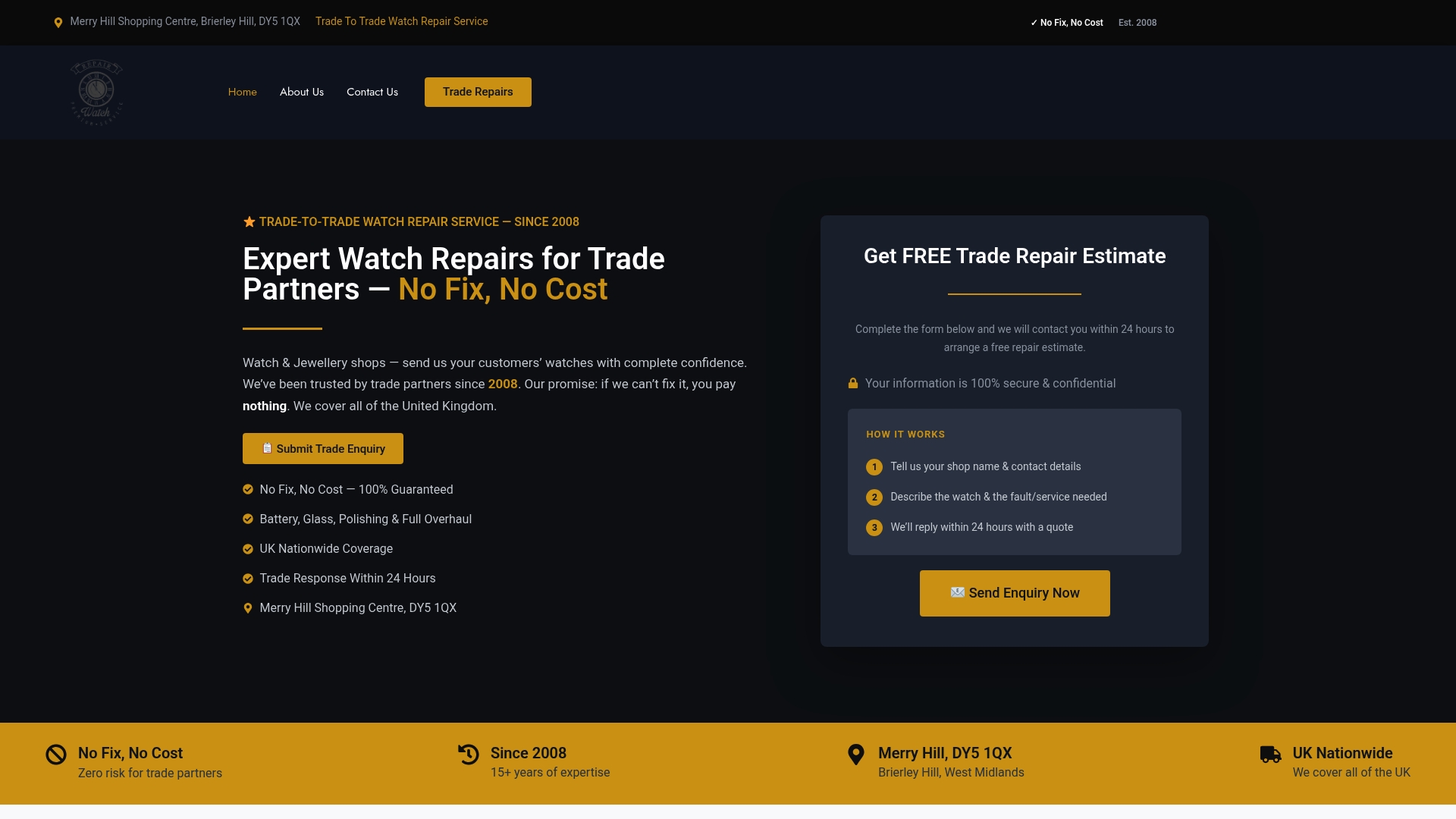
Every repair at Watchrepairstation starts with a full digital intake record, including serial number, movement calibre, and a written estimate approved before bench work begins. Our technicians work in calibre-specific batches, and partner shops receive stage-specific updates throughout the repair. The “No Fix, No Cost” guarantee means your shop carries zero financial risk. For a full overview of how our watch repair service works, including turnaround times and pricing for trade partners, visit the Watchrepairstation service page.
FAQ
What is a watch repair bottlenecks checklist?
A watch repair bottlenecks checklist is a structured set of intake, workflow, and communication steps designed to identify and remove the most common causes of repair delays in a watch shop.
What causes long watch repair delays?
The three leading causes are parts availability for vintage calibres, excessive backlog from extended warranties, and a shortage of specialised tooling, with poor intake documentation compounding all three.
How do I reduce abandoned watch repairs?
Send four structured updates per repair: intake confirmation, diagnosis and estimate, parts arrival, and collection readiness. Waiting for written customer approval before starting expensive work prevents the idle time that leads to abandonment.
How often should mechanical watches be serviced?
Industry standards recommend servicing mechanical watches every 5–7 years. Watches serviced past this interval require a full overhaul rather than a standard service, which increases both cost and turnaround time.
Does specialised software really reduce repair bottlenecks?
Yes. Generic electronics repair software cannot track movement-specific parts, lubricant service intervals, or calibre-linked repair histories. Watch-specific software eliminates the manual re-verification that doubles service time on poorly documented jobs.

Leave a Reply