

Watch repair overflow demand is the condition where incoming repair jobs exceed your shop’s current processing capacity, causing backlogs, extended wait times, and declining customer satisfaction. Every watch and jewellery retailer faces this at some point, whether during the pre-Christmas rush, post-lockdown surges, or the growing wave of vintage mechanical watch servicing. Handling watch repair overflow demand effectively requires three things working together: proactive capacity planning, digital workflow tools, and reliable trade repair partnerships. Watchrepairstation, established in 2008, delivers professional trade repair services specifically designed to help independent retailers absorb excess demand without compromising quality or customer trust.
What tools and systems support watch repair workflow optimisation?
The right software is the foundation of any overflow management plan. Watch repair software must handle movement diagnostics, multi-brand warranty tracking, serial number logging, and secure outworker management. General retail point-of-sale systems fail these requirements because watch repair throughput is low, multi-stage, and highly specific to each movement type.

Replacing paper receipts with a digital repair module is one of the highest-impact changes a shop can make. Automated status updates sent by SMS or email reduce front-of-house enquiries and give customers confidence that their repair is progressing. That reduction in inbound calls frees your staff to handle more repairs and customer interactions rather than answering “is it ready yet?” ten times a day.
Batch order tracking and B2B portals become critical when you are managing multiple repairs simultaneously across different brands and service levels. A portal that logs each job by serial number, repair stage, and estimated completion date gives you a live view of your workload. Without that visibility, overflow becomes invisible until it is already a crisis.
| Tool category | Core function | Overflow benefit |
|---|---|---|
| Repair tracking software | Serial number and stage logging | Prevents lost jobs and miscommunication |
| Communication automation | SMS and email status updates | Reduces front-of-house enquiry volume |
| B2B trade portal | Batch order and partner management | Scales capacity without adding headcount |
| Inventory control module | Parts and warranty management | Avoids delays caused by missing components |
Pro Tip: Keep every repair record digital from day one. A lost paper receipt during a busy period can cost you a customer permanently. Digital records also make it far easier to audit your backlog and spot bottlenecks before they compound.
How can watch retailers forecast demand and prevent overflow?
Proactive capacity management prevents overflow from occurring in the first place. A 12–18 month rolling forecast with weekly updates and defined trigger thresholds gives you the lead time to activate overflow solutions before service quality degrades. Setting a threshold at 85% capacity utilisation, for example, means you act before the queue becomes unmanageable.
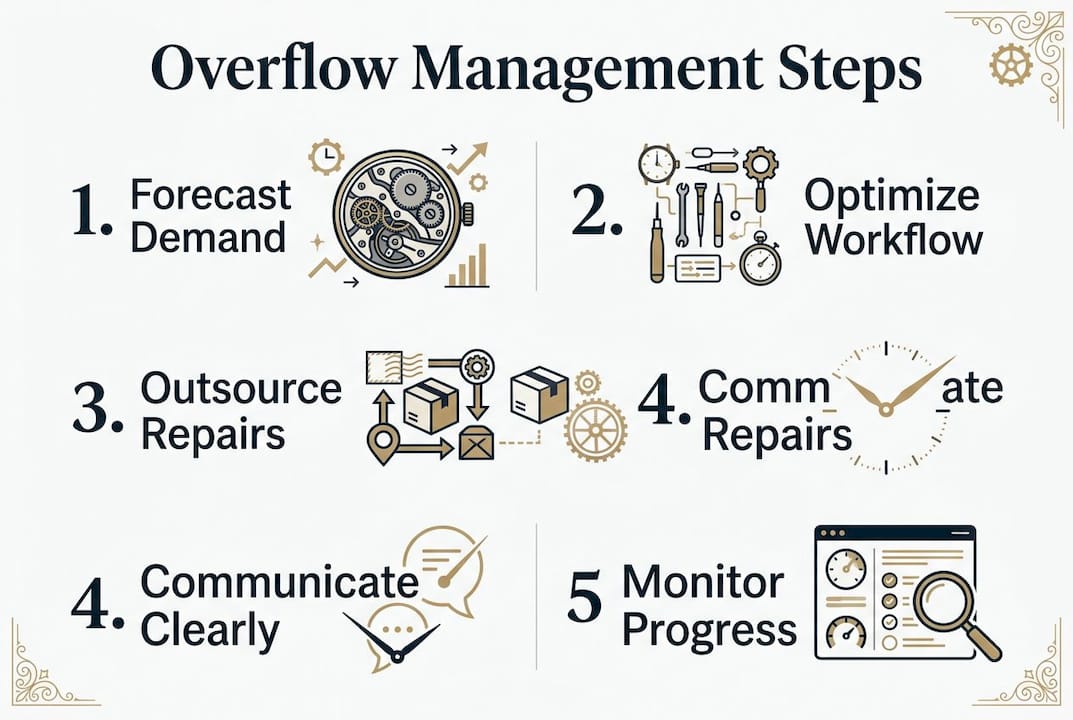
Building a seasonal surge calendar is the most practical starting point. Pull your repair intake data from the previous two or three years and map the peaks. Pre-Christmas, post-holiday returns, and the spring service season for mechanical watches are predictable. Knowing they are coming means you can pre-approve flexible capacity arrangements well in advance.
Here is a four-step process for building a demand forecast that actually works:
- Audit your historical intake data. Pull monthly repair volumes for the past 24 months and identify your three highest-demand periods.
- Set a capacity trigger threshold. Define the intake level at which you activate your overflow plan. Most shops find 80–85% of normal capacity is the right point.
- Create a surge calendar. Map your peak periods against your staffing and workshop availability. Flag weeks where the gap between demand and capacity is widest.
- Pre-approve your overflow partners. Agree terms with a trade repair partner like Watchrepairstation before you need them. Activating a partnership under pressure leads to errors.
Pro Tip: Audit your physical workspace at least twice a year. Reorganising bench space and repair slotting can increase throughput without any additional cost. Many shops discover they have been working at 70% of their actual physical capacity simply due to poor layout.
What outsourcing options exist for managing repair overflow?
Outsourcing to a B2B trade repair partner is the most cost-effective way to scale repair capacity quickly. B2B trade partnerships allow you to absorb rising demand without the overhead of recruiting and training skilled watchmakers, which can take years. The financial and operational risk of hiring a qualified horologist for a temporary surge is simply not justified for most independent retailers.
Brand restrictions add another layer of pressure. Watch brands are extending warranties beyond five years and restricting parts access for independent repairers. This means certain jobs cannot legally or practically be completed in-house, making accredited external partners not just convenient but necessary. An accredited multi-brand workshop can handle those jobs while you retain the customer relationship.
Multi-brand accreditation and strong trade networks are the defining criteria when selecting an outsourcing partner. A workshop with accreditation across major brands can absorb vintage, mechanical, and quartz repairs without quality compromise. That breadth of capability is what separates a reliable trade partner from a general repair shop.
Best practices for a reliable outsourcing partnership:
- Agree turnaround times and quality standards in writing before sending any jobs.
- Use a shared tracking system or portal so you can monitor repair progress without chasing by phone.
- Confirm warranty handling procedures upfront, particularly for in-warranty or brand-restricted movements.
- Start with a trial batch of lower-risk repairs before committing high-value or customer-critical jobs.
- Review partner performance quarterly against agreed turnaround and quality benchmarks.
How to manage customer communication during overflow periods
Delivering a professional estimate within two working days is the single most important customer service standard during overflow. Estimates completed within 48 hours set a clear expectation and signal to the customer that their repair is being handled professionally. Delays in estimate delivery are the most common trigger for customer complaints during busy periods.
Automated communication removes the inconsistency that comes from relying on staff to remember who needs an update. A digital repair workflow system triggers status messages at defined stages: job received, estimate sent, repair approved, repair completed, ready for collection. That sequence covers the full repair lifecycle without a single manual intervention.
Common mistakes to avoid during overflow periods:
- Sending no update until the repair is complete. Customers interpret silence as a problem.
- Giving verbal estimates without logging them. Discrepancies between what was said and what is charged destroy trust.
- Failing to flag when a repair cost approaches or exceeds the watch’s value. Proactively raising this builds long-term trust and avoids disputes.
- Using inconsistent messaging across staff. A brief template for common update scenarios keeps communication professional.
Pro Tip: Set a rule that every repair without a customer update for more than five working days triggers an automatic flag in your system. Customers rarely complain about too many updates. They always complain about too few.
What are the common pitfalls in watch repair overflow scenarios?
Overloading your in-house watchmakers is the fastest route to quality failures. Watch repair is slow, detailed work that requires concentration. Pushing a skilled technician to rush a movement service to clear a backlog produces errors that cost far more to fix than the original delay would have cost in customer goodwill.
Poor serial number and parts tracking compounds the problem. A missing component for a specific movement can stall multiple repairs simultaneously if your inventory system does not flag the shortage early. Specialised software that tracks parts by movement type and flags low stock prevents this category of delay entirely.
When a repair cost approaches the value of the watch itself, the customer deserves to know before work begins. Transparency at that moment builds more trust than any marketing effort. Shops that skip that conversation lose the customer permanently when the invoice arrives.
Common overflow pitfalls and how to address them:
- Watchmaker burnout. Distribute workload across in-house and outsourced capacity rather than concentrating it on one technician.
- Parts shortages. Use inventory alerts set at minimum stock levels for the ten most common movement types you service.
- Untracked outsourced jobs. Every job sent to a trade partner must be logged in your system with an expected return date and a follow-up trigger.
- Inconsistent customer expectations. Train all front-of-house staff on the same estimate and update protocols.
Pro Tip: A simple status dashboard showing jobs by stage, overdue alerts, and partner returns gives you a daily snapshot of your entire repair operation. Reviewing it for ten minutes each morning catches delays before they become complaints.
Key takeaways
Handling watch repair overflow demand requires combining proactive forecasting, digital workflow tools, and accredited trade partnerships before capacity is exhausted, not after.
| Point | Details |
|---|---|
| Forecast before overflow hits | Use a 12–18 month rolling forecast and set an 85% capacity trigger to activate overflow plans early. |
| Digitise your repair workflow | Replace paper receipts with digital modules to automate status updates and reduce lost jobs. |
| Outsource to accredited partners | B2B trade repair partnerships scale capacity without recruitment overhead or training delays. |
| Communicate at every stage | Deliver estimates within 48 hours and automate status updates throughout the repair lifecycle. |
| Flag cost versus value honestly | Tell customers when repair costs approach watch value. It builds trust and prevents disputes. |
Why overflow management is the most underrated growth lever in watch retail
Most shop owners I speak with treat overflow as a crisis to survive rather than a signal to act on. That framing is the problem. A surge in repair demand is evidence that your customers trust you with their watches. The question is whether your operation is set up to honour that trust at scale.
The shops that grow consistently are not the ones with the most in-house watchmakers. They are the ones that have built reliable external partnerships and invested in digital systems early. Watchrepairstation has been working with independent retailers since 2008 specifically because the economics of hiring skilled horologists do not work for most shops at overflow volumes. Outsourcing to a trusted trade partner is not a compromise. It is the correct structural response to a demand pattern that is inherently seasonal and unpredictable.
The rise in vintage and mechanical watch servicing is not a short-term trend. Demand for reliable outsourcing options will only increase as more consumers seek to service inherited and pre-owned pieces. Shops that build their overflow capacity now will capture that market. Shops that wait until they are drowning in backlog will lose customers to whoever can turn repairs around faster.
The uncomfortable truth is that most overflow problems are communication failures before they are capacity failures. Customers tolerate longer wait times when they receive honest, timely updates. They do not tolerate silence. Fix the communication system first, then address the capacity.
— efe
How Watchrepairstation helps retailers manage repair overflow
Watchrepairstation has supported independent watch and jewellery retailers across the UK since 2008 with a trade-only repair service built around the realities of overflow demand. The “No Fix, No Cost” guarantee removes financial risk entirely, so you can send jobs with confidence during your busiest periods.
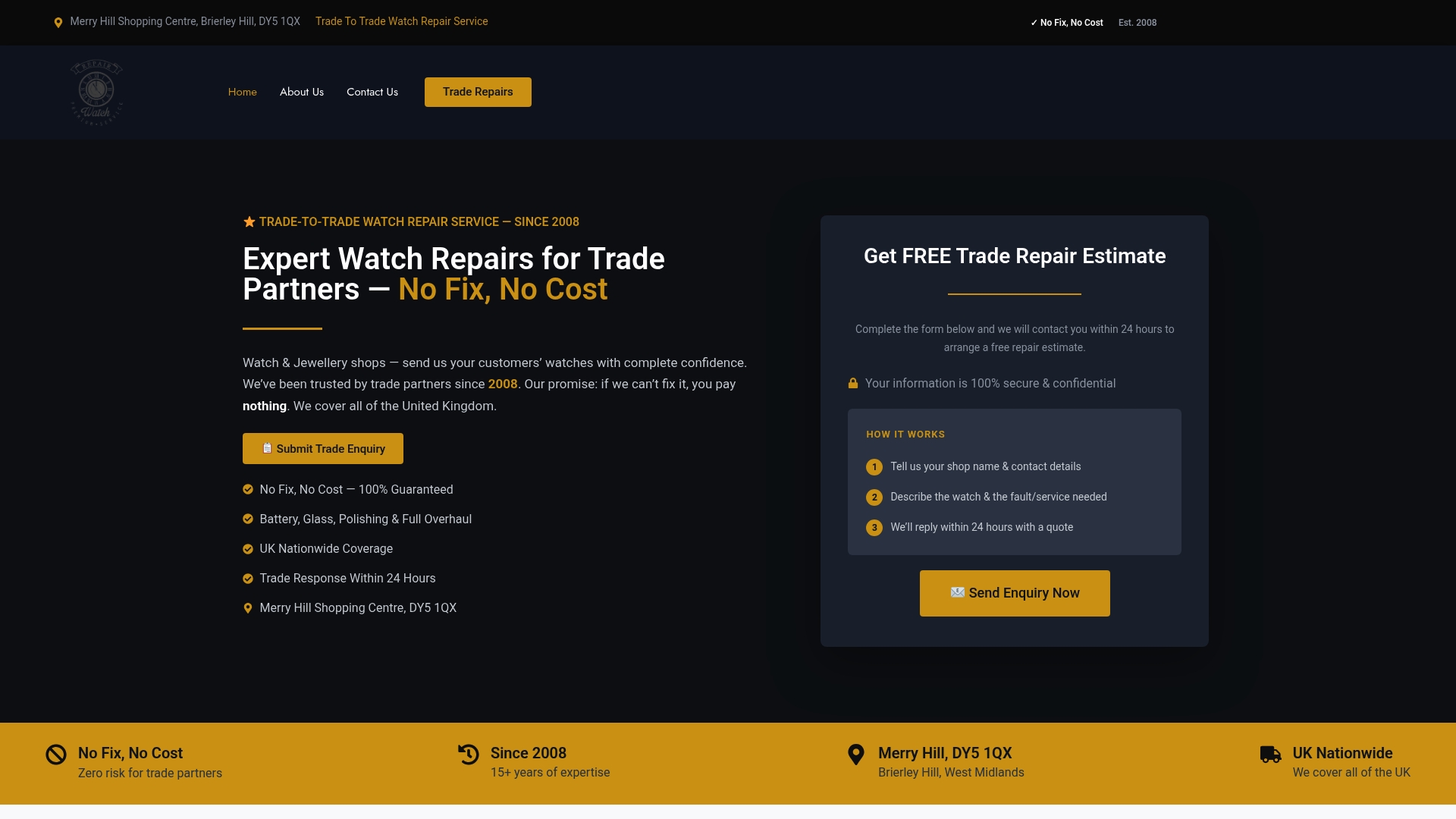
The service covers battery installation, movement repairs, and full overhauls, with professional estimates delivered within two working days. Batch order support and a dedicated B2B workflow mean you retain full visibility of every job without managing the repair yourself. For retailers looking to protect their reputation and retain customers during peak demand, Watchrepairstation’s professional watch repair service is the practical next step.
FAQ
What is watch repair overflow demand?
Watch repair overflow demand occurs when incoming repair jobs exceed a shop’s current processing capacity. It typically results in extended wait times, backlogged repairs, and declining customer satisfaction if not managed proactively.
How do I know when my shop has reached overflow capacity?
Set a trigger threshold at around 85% of your normal repair intake capacity. When weekly intake consistently hits that level, activate your overflow plan, whether that means outsourcing to a trade partner or adjusting your booking schedule.
What is the fastest way to add repair capacity without hiring?
Partnering with an accredited B2B trade repair service is the fastest route. It adds skilled capacity immediately without the recruitment, training, or employment costs associated with hiring a qualified watchmaker.
How quickly should I send repair estimates to customers?
Estimates should reach customers within two working days of receiving the watch. Delays beyond that point significantly increase the likelihood of complaints and cancellations during busy periods.
Can I outsource repairs for brand-restricted watches?
Accredited multi-brand workshops can handle many brand-restricted repairs, particularly for watches outside the manufacturer’s warranty period. Always confirm accreditation and parts sourcing with your trade partner before accepting the job from your customer.

Leave a Reply